Seattle’s Climate Puzzle
at the Seattle Design Festival 2025: FEEDBACK
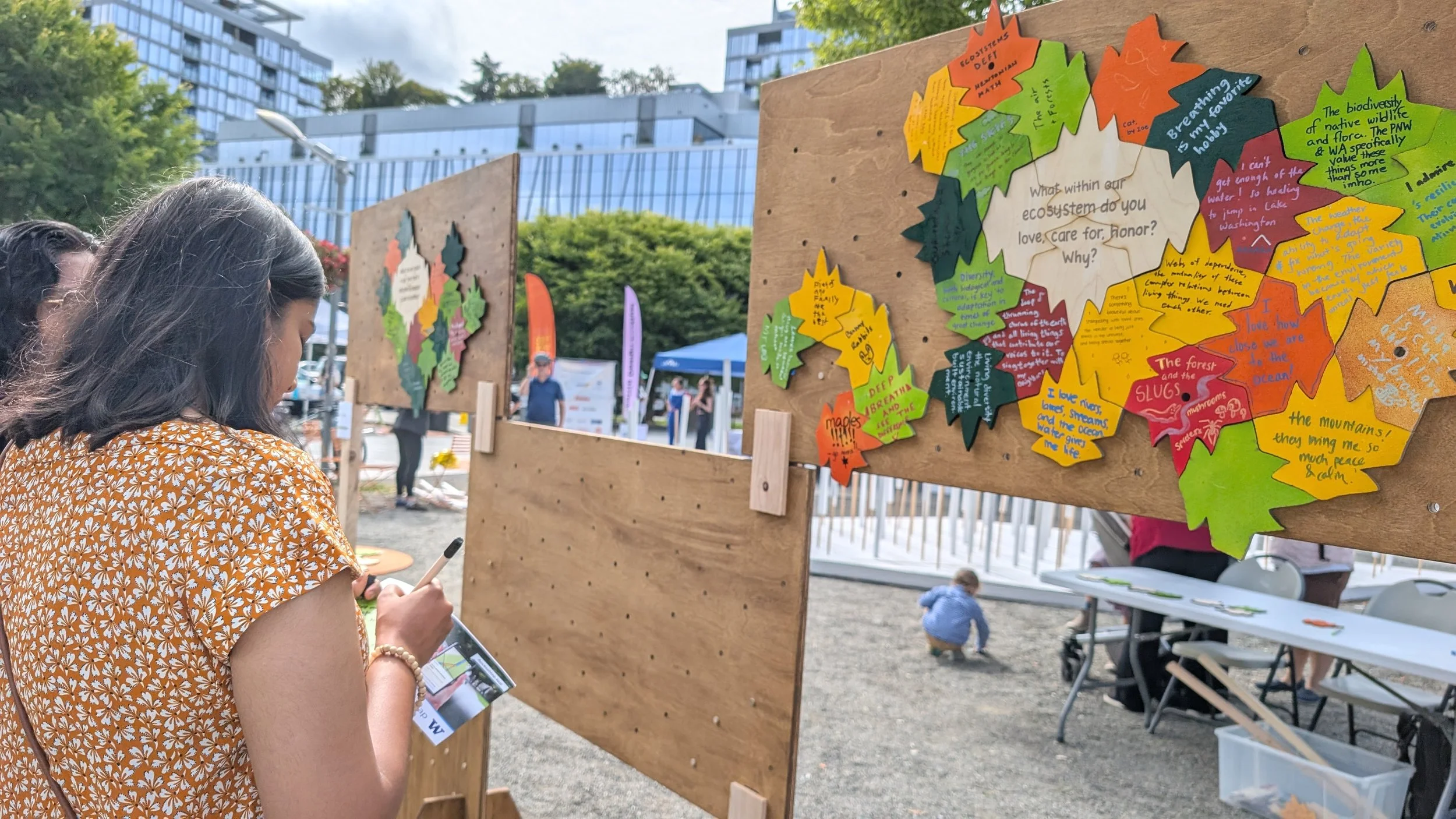
Designed in 6 weeks to engage festival goers in conversations about climate anxiety and climate inspiration, this series of wall panels and its display of four prompts guides participants to reflect on their relationship to the environment and environmental action.
Collaborators
General contractor (consulting)
Content writer
What I did
Creative direction
Design and build
Project management
Activity facilitation
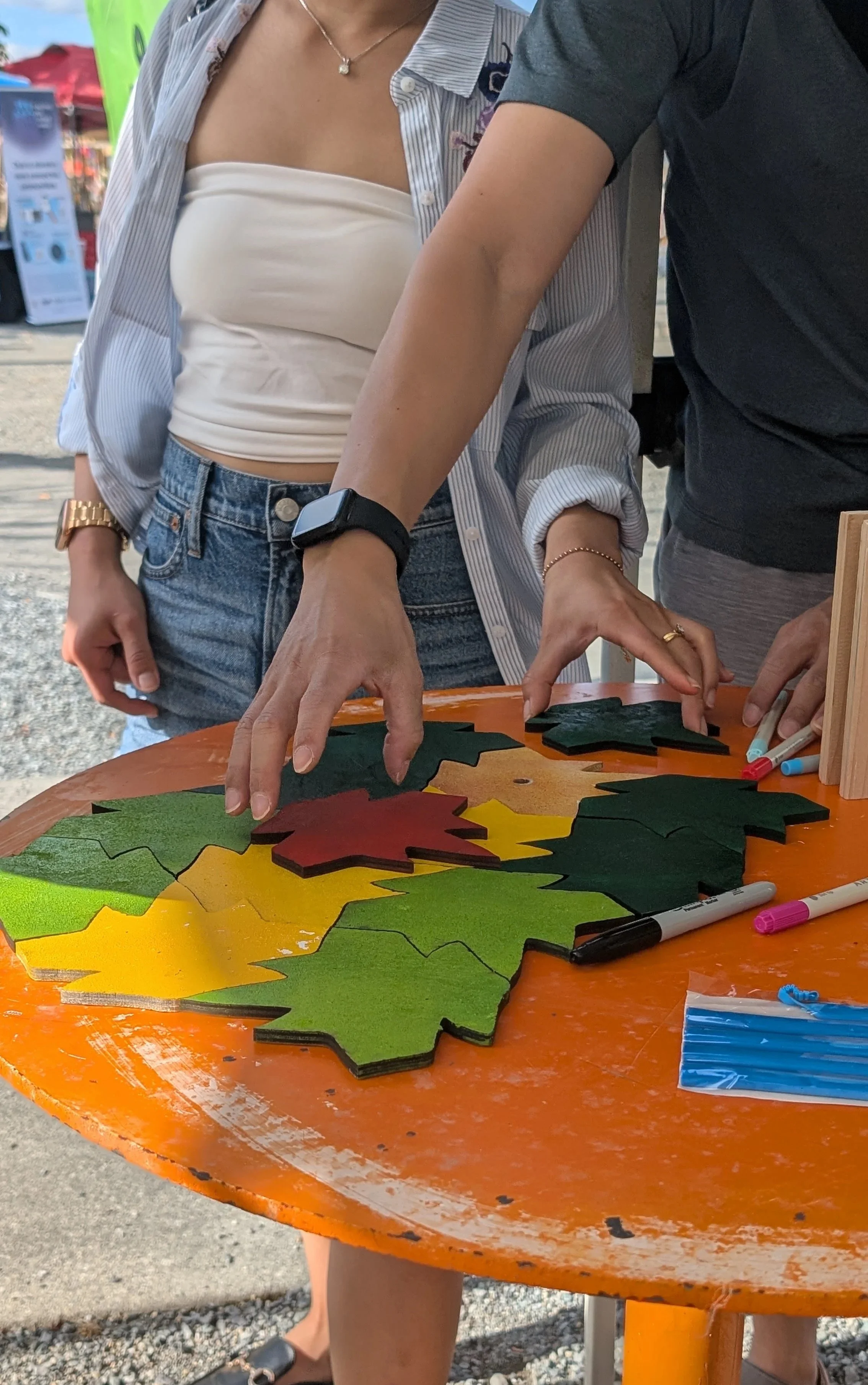
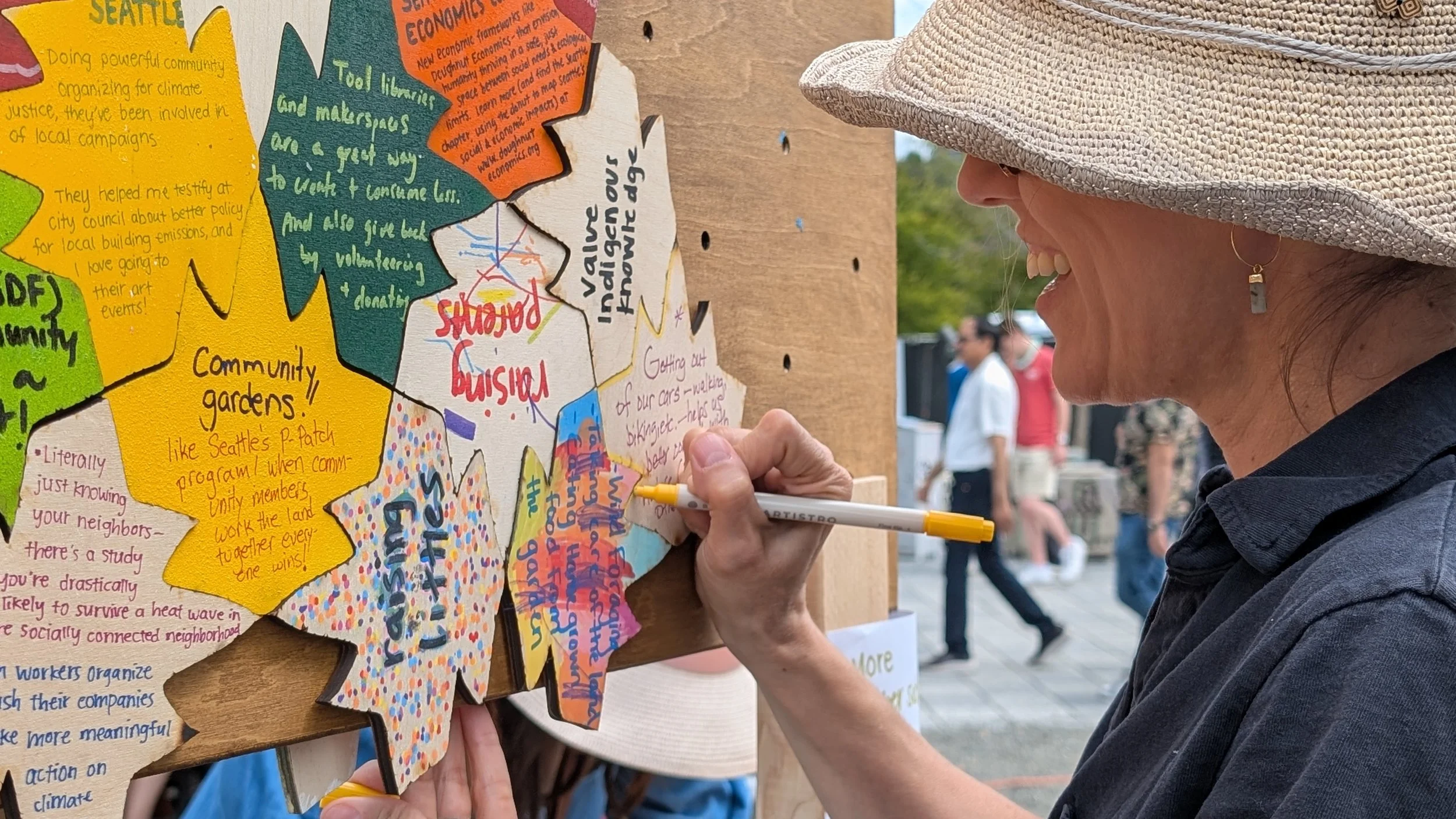
A community-made mosaic
the theme
the questions
the structure
sketching & cardboard prototyping
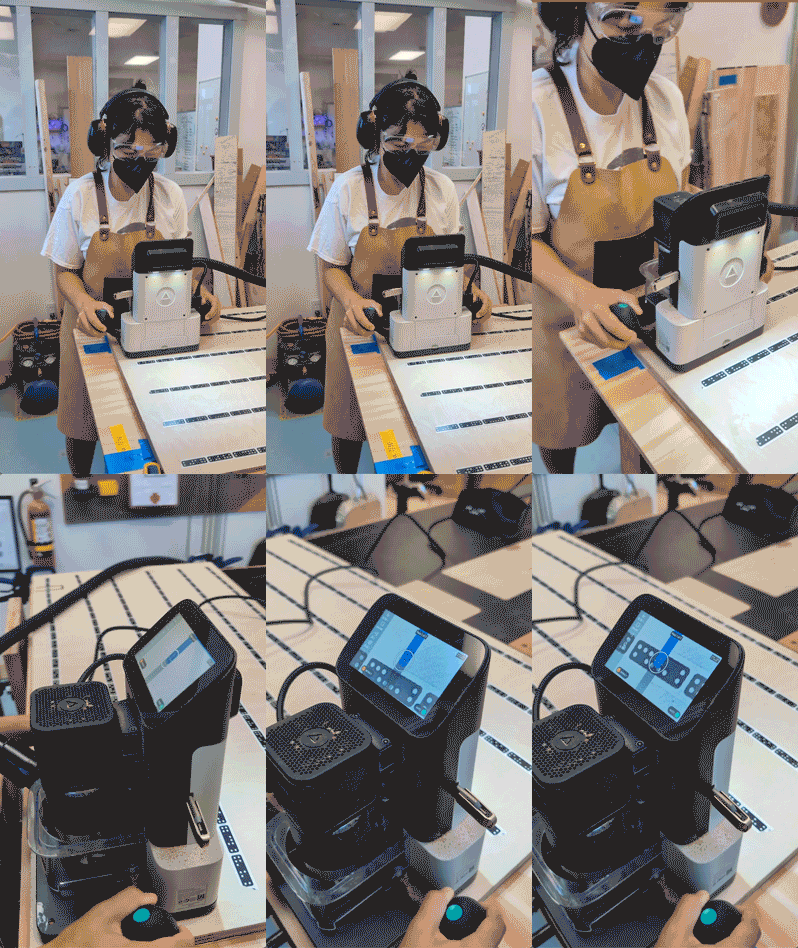
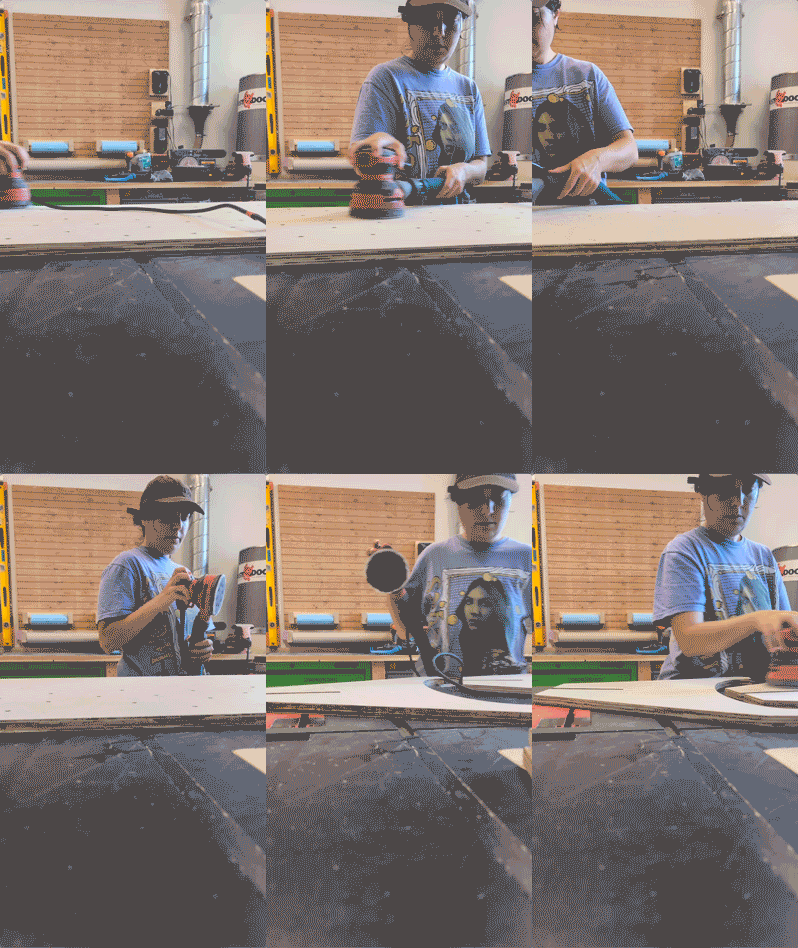
building
puzzle pieces
block party
reflection
what i learned and analysis of what i made (what worked and didnt work)
ideas of how i might redesign it even better based on what i learned
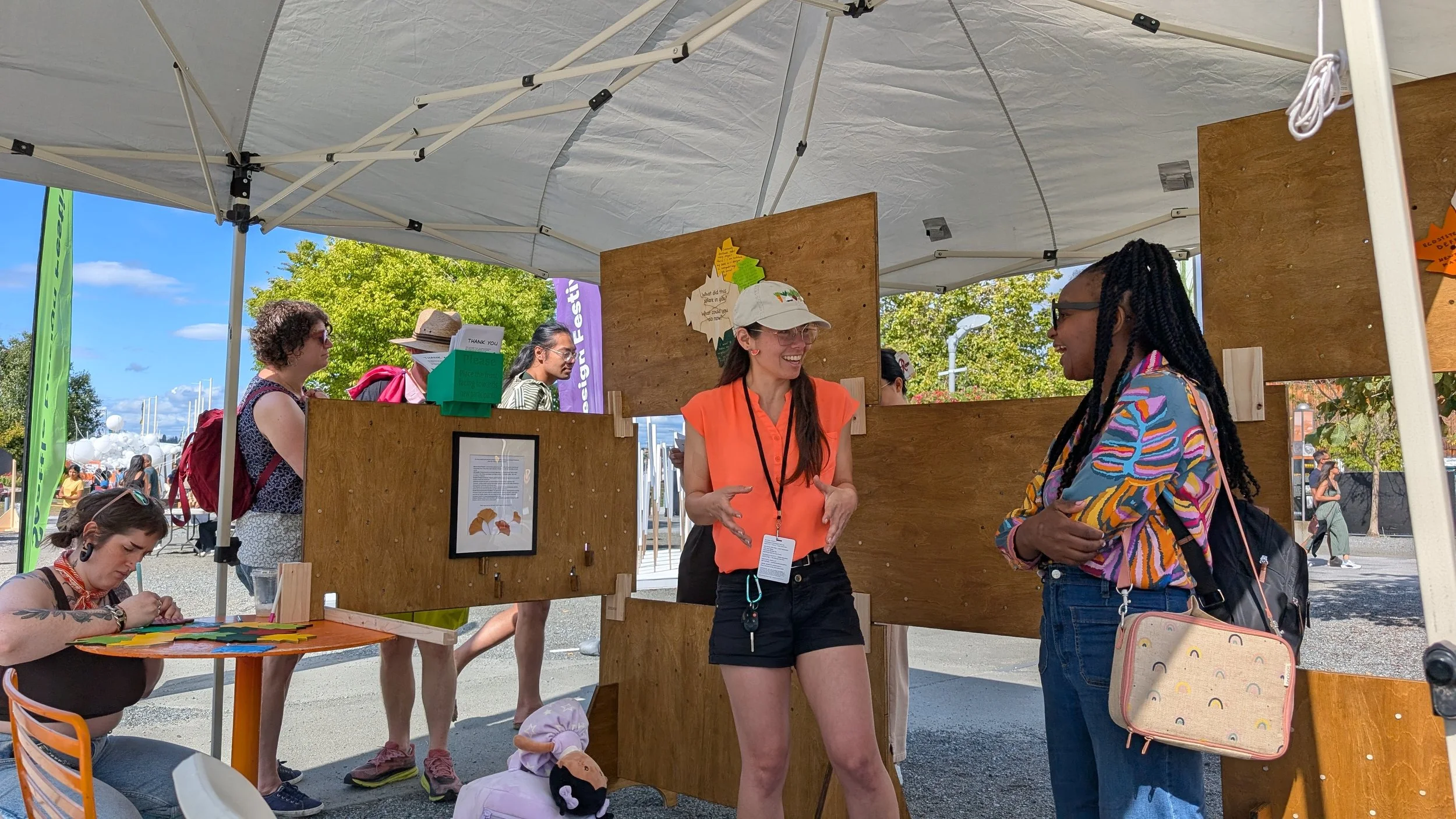
Seattle's Climate Puzzle created the space for conversations about topics ranging from the delight of seeing porpoises in the sound, the tragedy of glacial flooding in Alaska, and the science of urban arboriculture to make built environments livable for trees.
Why Create A Puzzle?
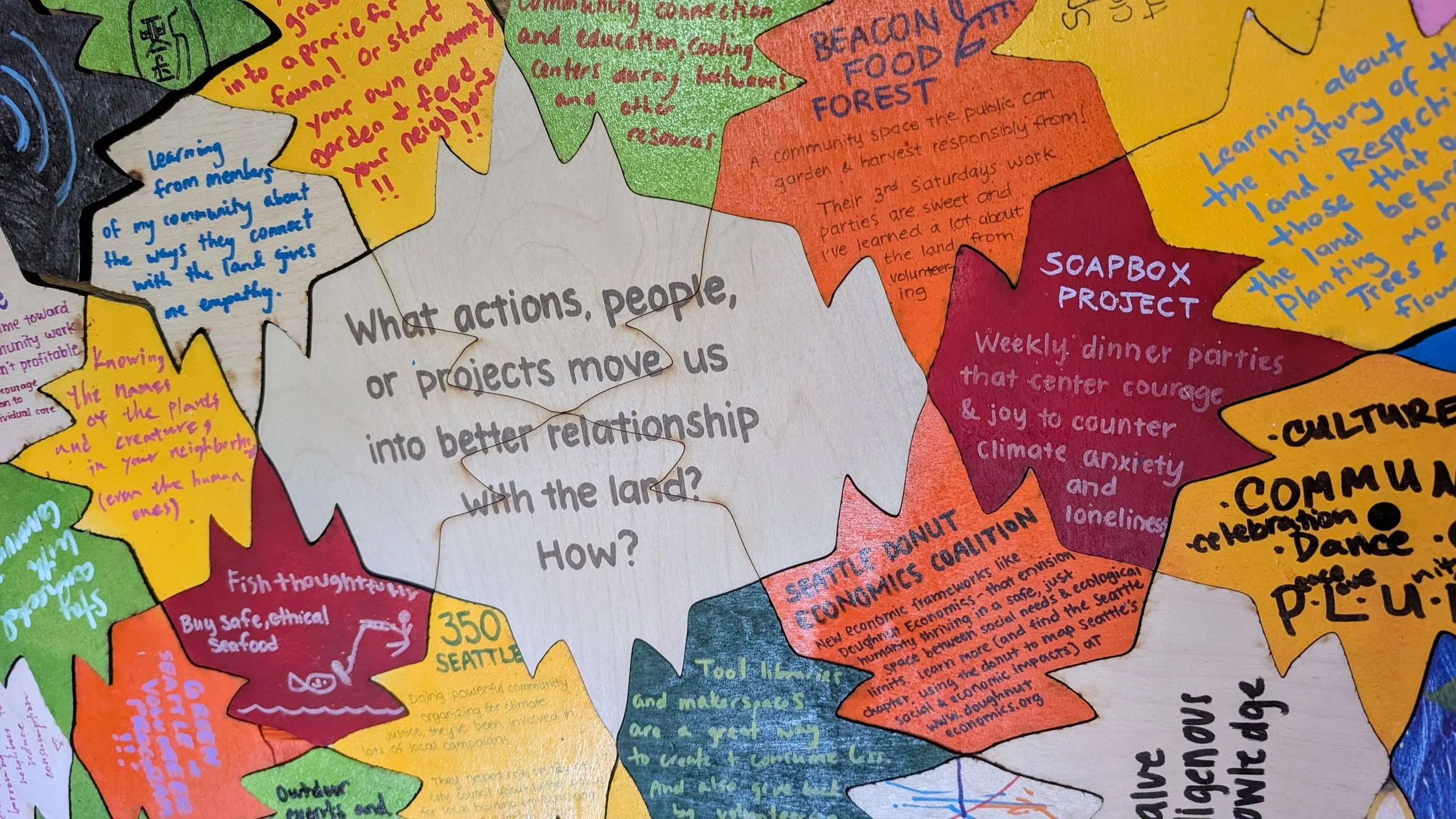
The festival’s theme this year was FEEDBACK. I contemplated the idea that every individual’s contribution to society and the environment is a form of feedback that coalesces to create the world we live in, and chose the topic of climate change because it is relevant for everyone attending a festival in Seattle. Seattle’s Climate Puzzle provides an interactive public forum in a playful and creative way, where participants converse about their experiences of the ecosystem and environmental crisis by fitting their puzzle pieces together.
My Goals For The Project
Warm, safe and friendly conversation space for discussion about a challenging topic
Strong and compelling guided reflection questions to inspire personal storytelling and insights
Hands-on design activity that includes people of all ages
Inspire hope and pathways to a livable Earth
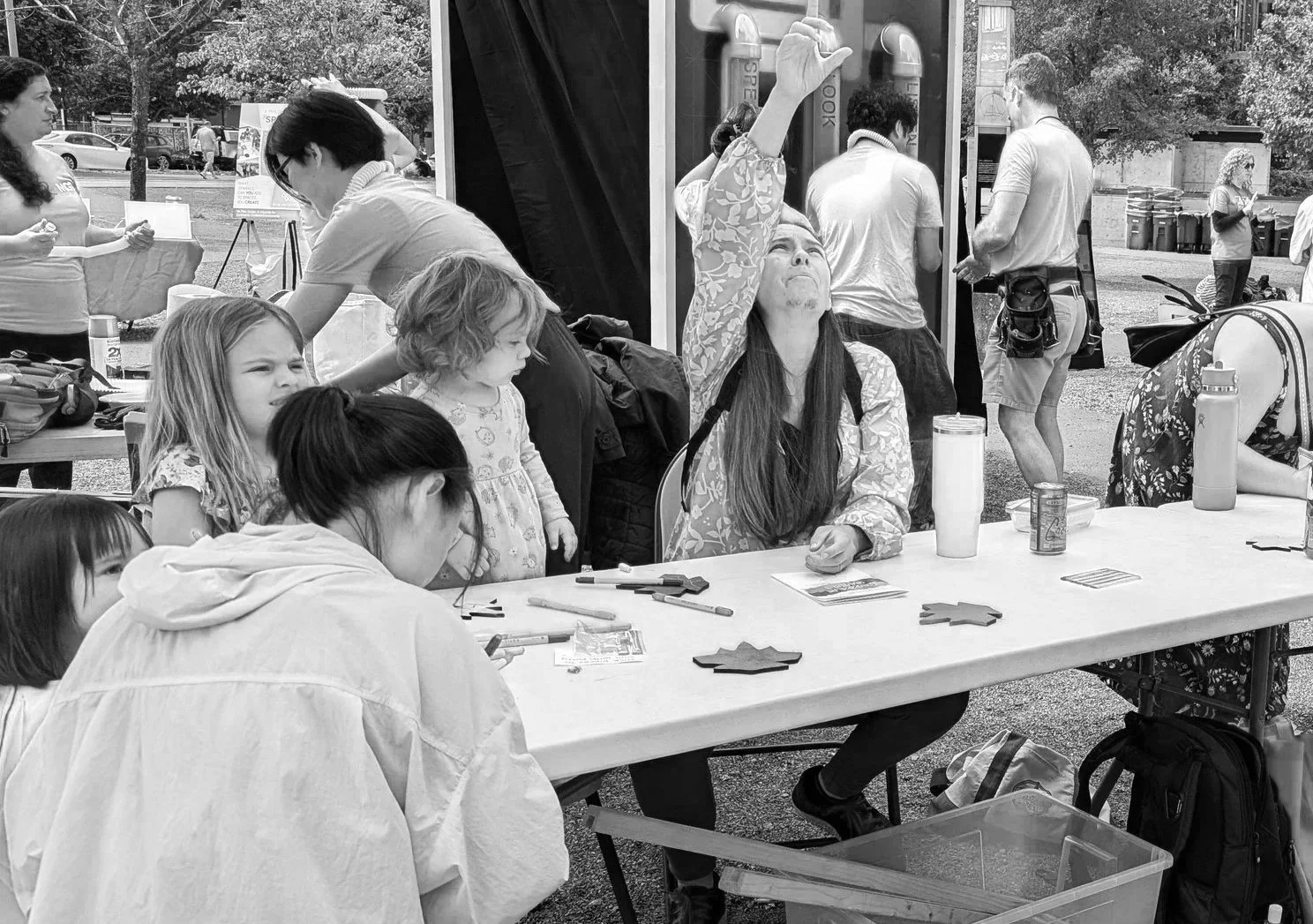
“Participant quote here”
“Participant quote here”
Creating A Built Interface
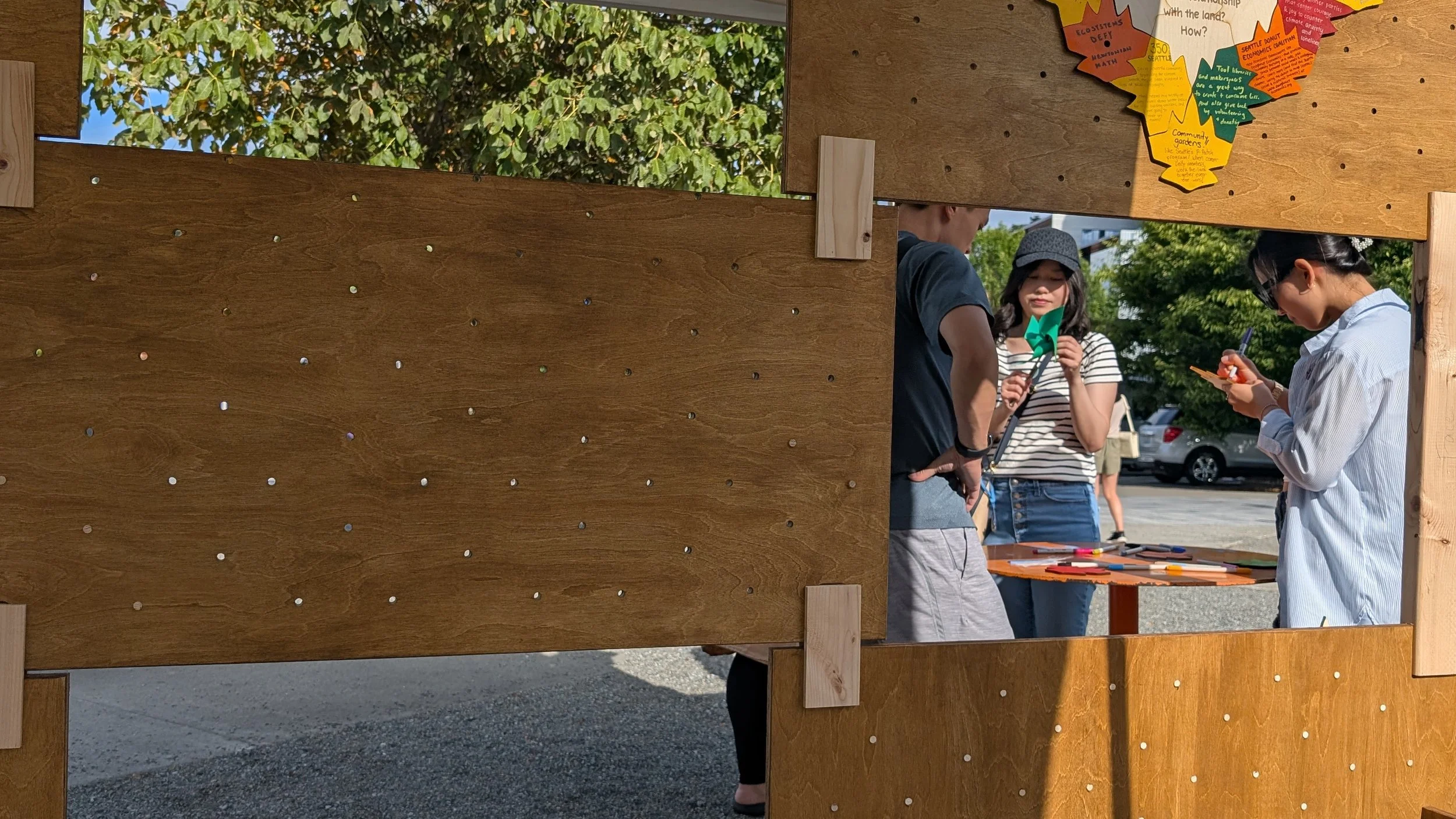
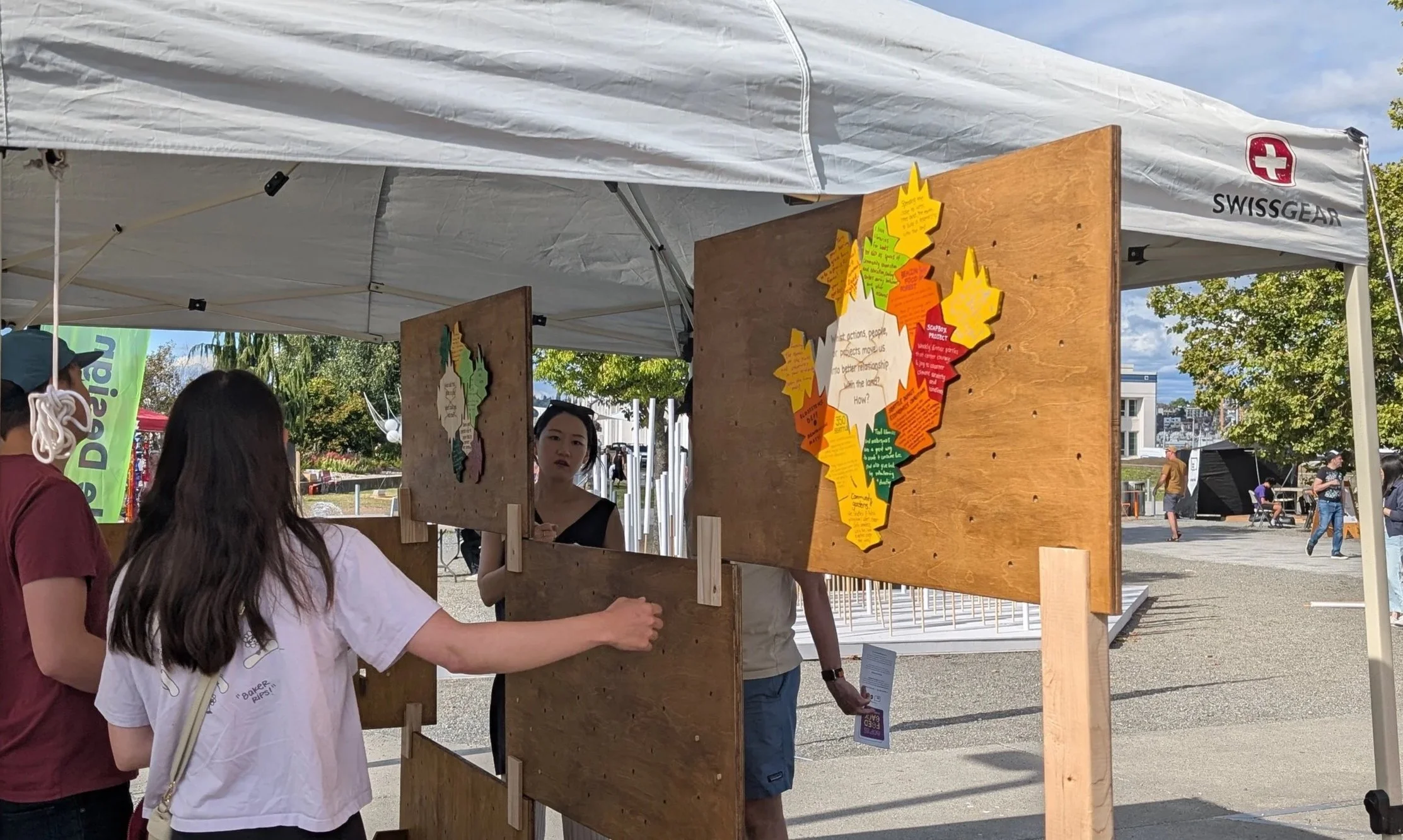
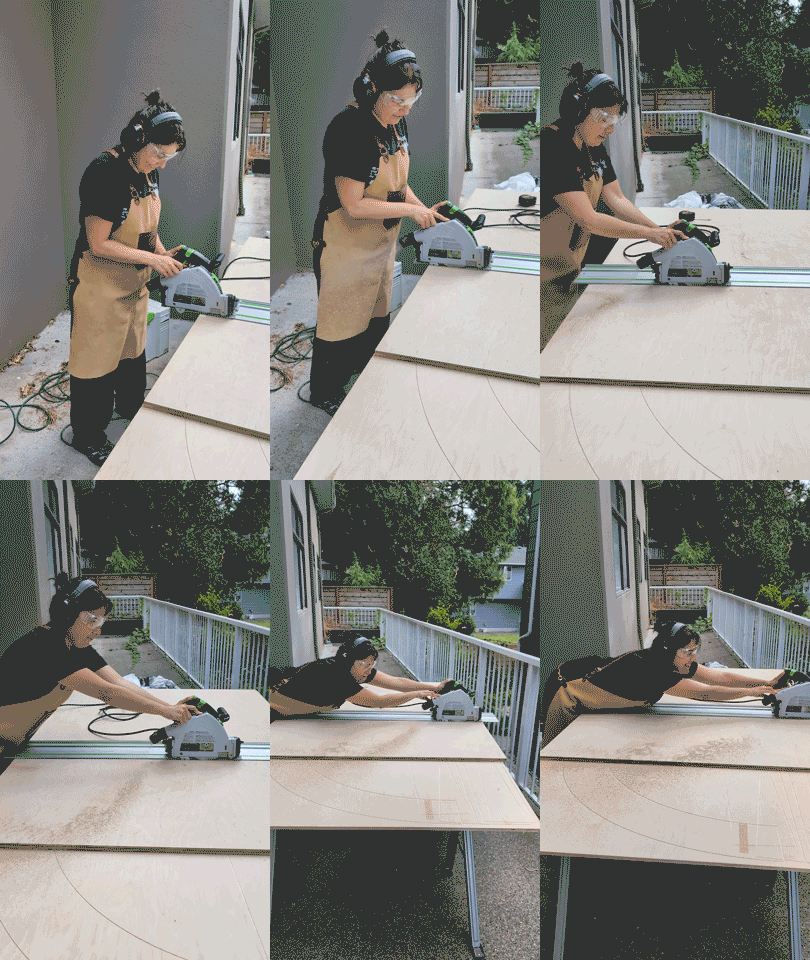
I needed to construct a physical interface that would “walk” people through a creative reflection process. I did research, created sketches and physical prototypes to figure out how to create something that I could breakdown and transport in my car to then assemble later. I also thought about size and proportion for visitors of various heights and abilities, and how to attach the puzzle pieces onto it. Because it was just me building and transporting this, and I had an extremely limited budget, I was very constrained.
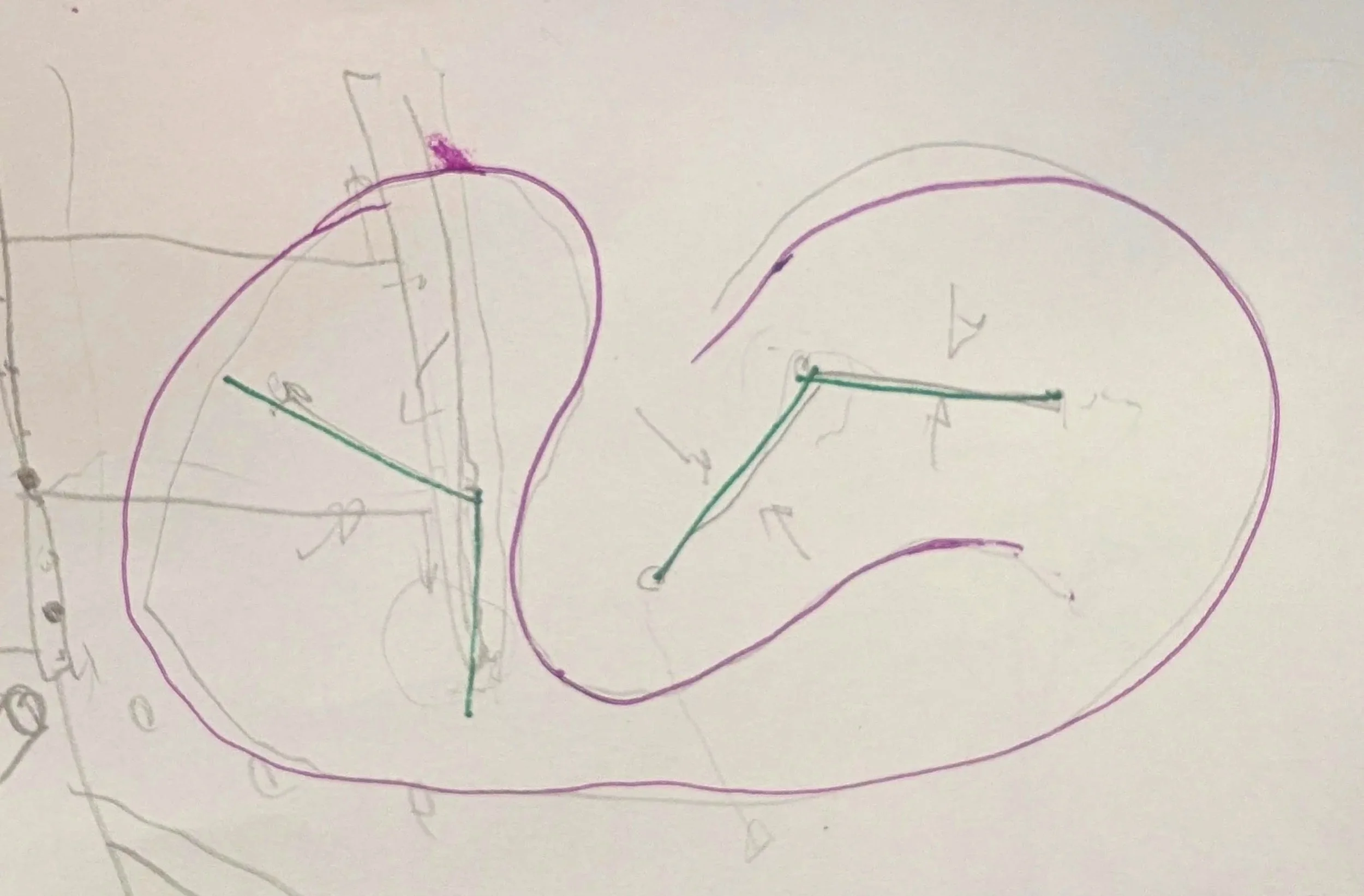
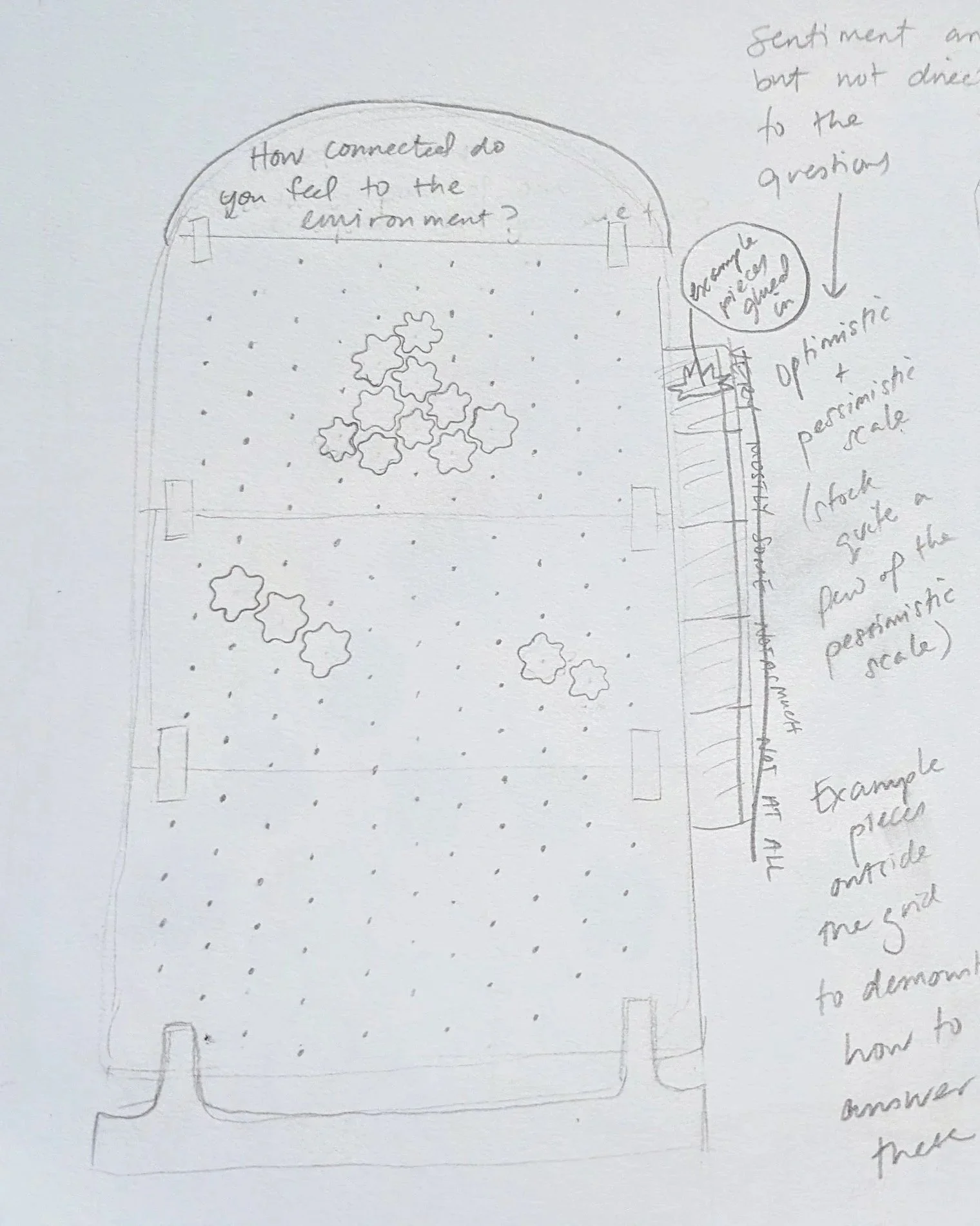
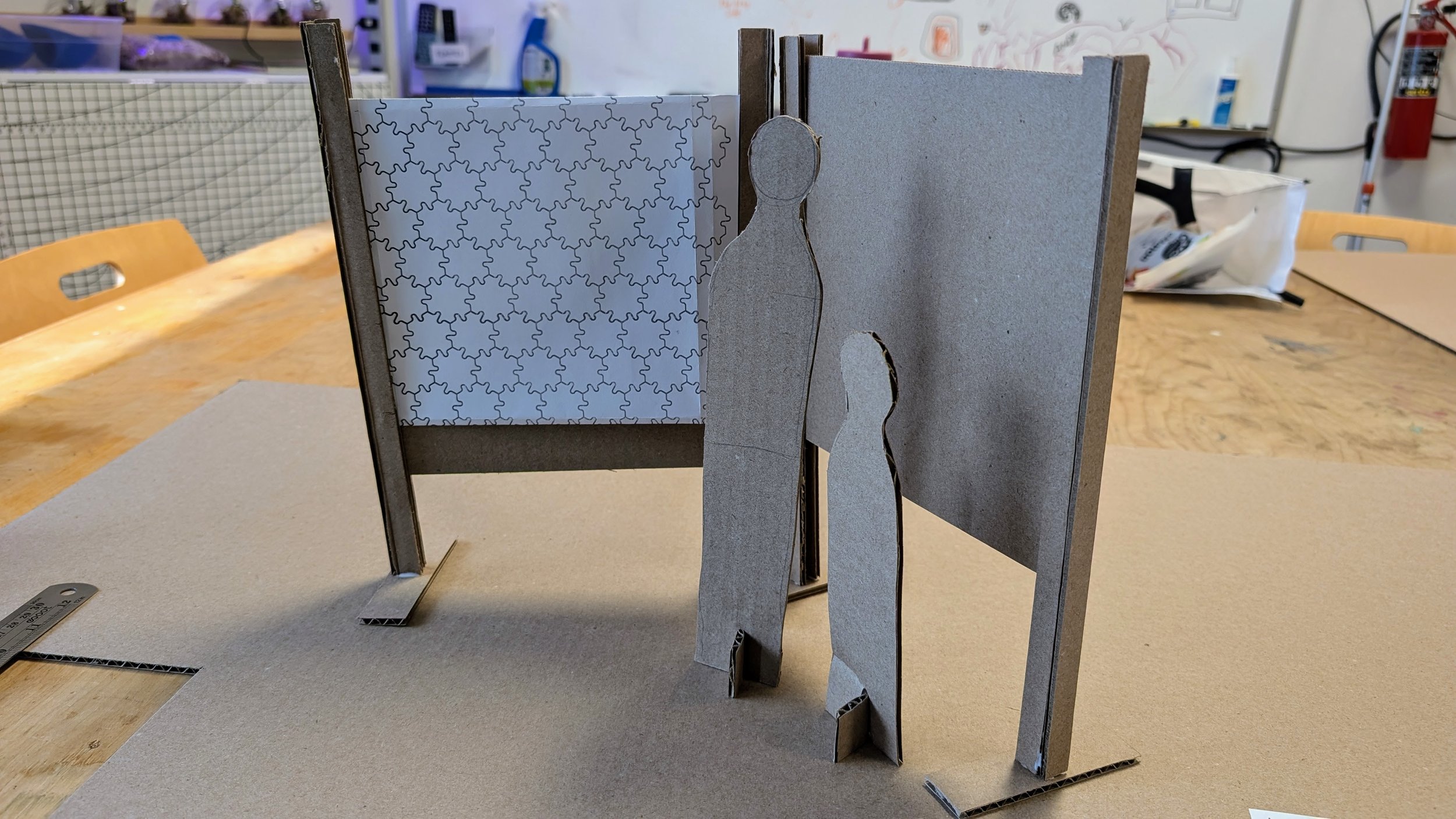
Early sketches of ideas for walls that people could walk around. The open frames concept was something we discovered by playing around with the modular pieces.
Inviting Our Audience To Reflect With Hope & Inspiration
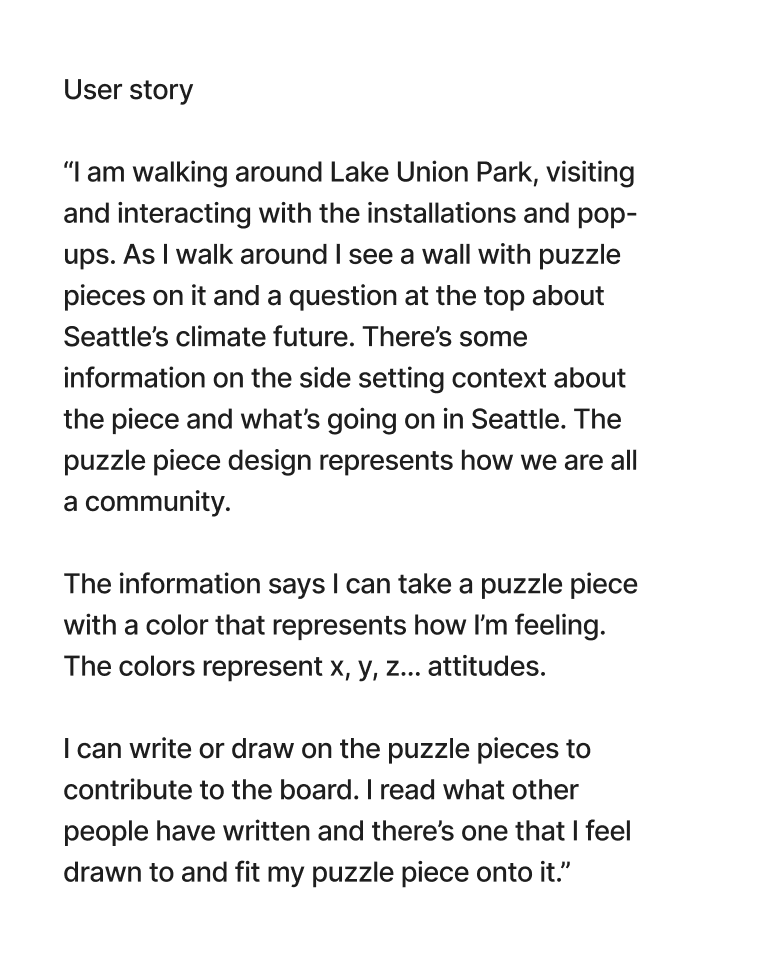
I collaborated with a content designer to produce a zine that would guide participants through the topics of discussion. I wrote a user story so we could align on the vision for the activity. Then we developed four questions together. Our collaboration continued as I gave her feedback on the zine she wrote to provide a lens and context for the questions.
The Questions
What within our ecosystem do you love, care for, and honor?
What do you notice in our lives that is affected by changes in our ecosystem?
What actions, people, or projects move us into better relationship with the land?
What did this exercise spark in you?
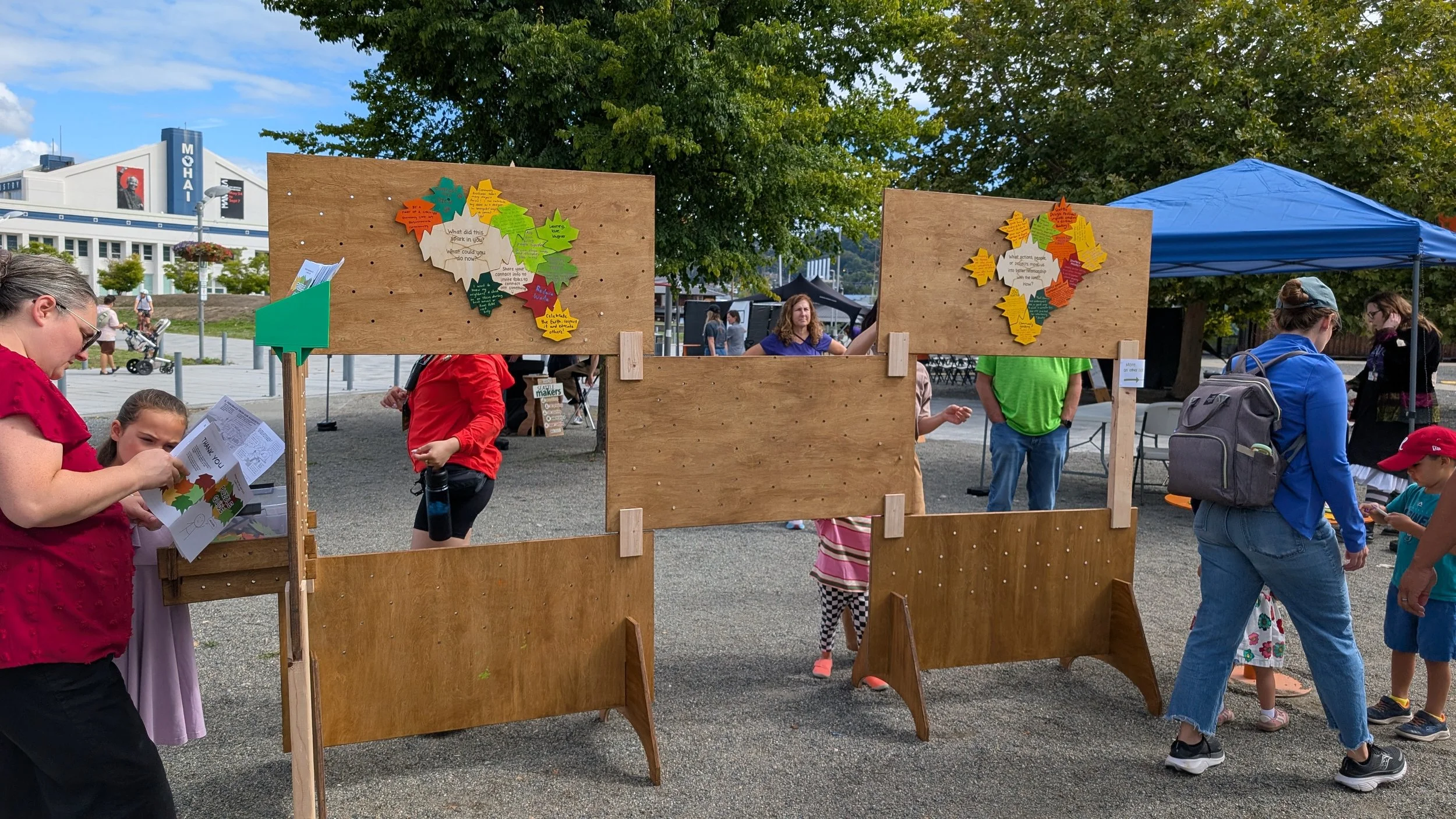
This was my first time designing a built structure. While there’s room to improve, I learned that I liked the openness of the panels for the festival environment—one could appreciate the presence of others working on the opposite side.