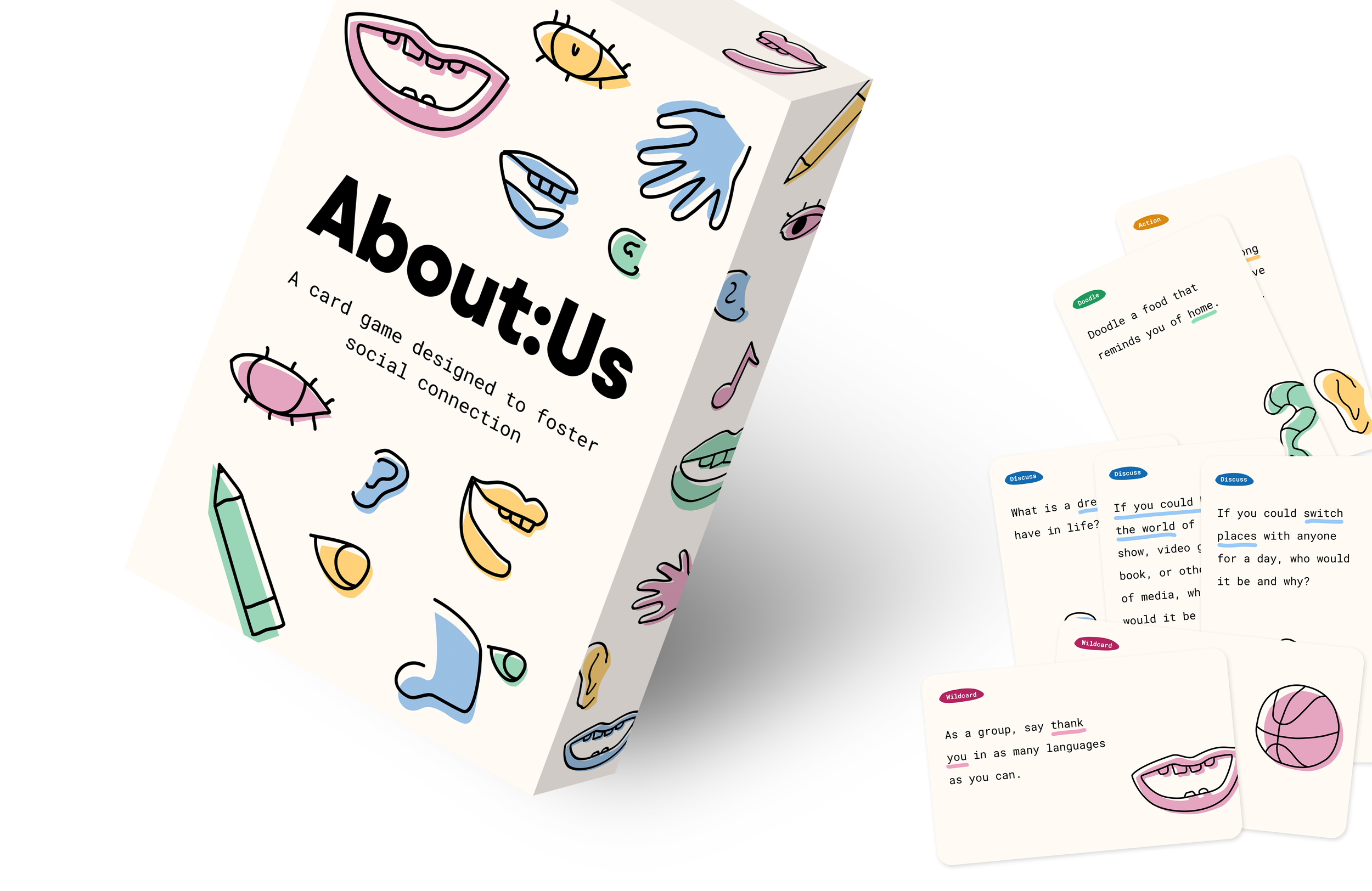
About:Us — a card game
A prompt-based card game designed to foster genuine connections and cultural sharing between students at international high schools.
From a 10-week class project to a reality in classrooms.
My team and I developed a card game to help students at international schools get to know each other. We have printed and launched the game to begin in classrooms for the 2024-25 school year.
TeamThree other graduate students
RoleDesign Researcher, Game Designer, and Illustrator
Duration10 weeks + ongoing
CompanyMHCI+D at University of Washington x The Northwest School in Seattle
CONTEXTInternational students at a Seattle school were experiencing challenges integrating to the new environment, so I and my team researched and designed a solution, testing with their students, in 10 weeks.
The Northwest School is an international middle and high school in Seattle that is made up of approximately 10-20% international students, and we worked directly with their Diversity, Equity, and Inclusion (DEI) team.
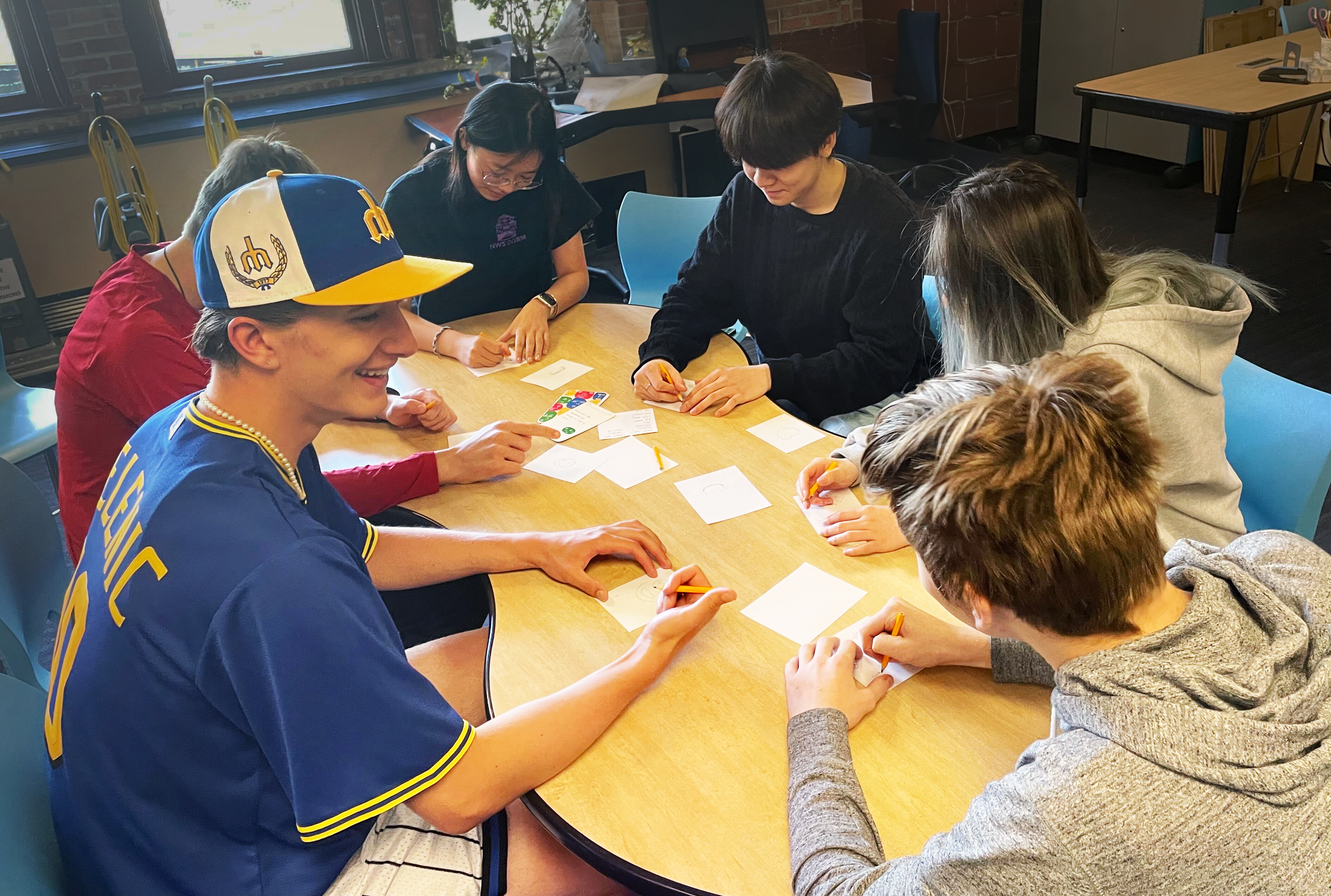
Students playing About:Us during one of our tests.
The solutionAbout:Us
A card game designed to foster social connection
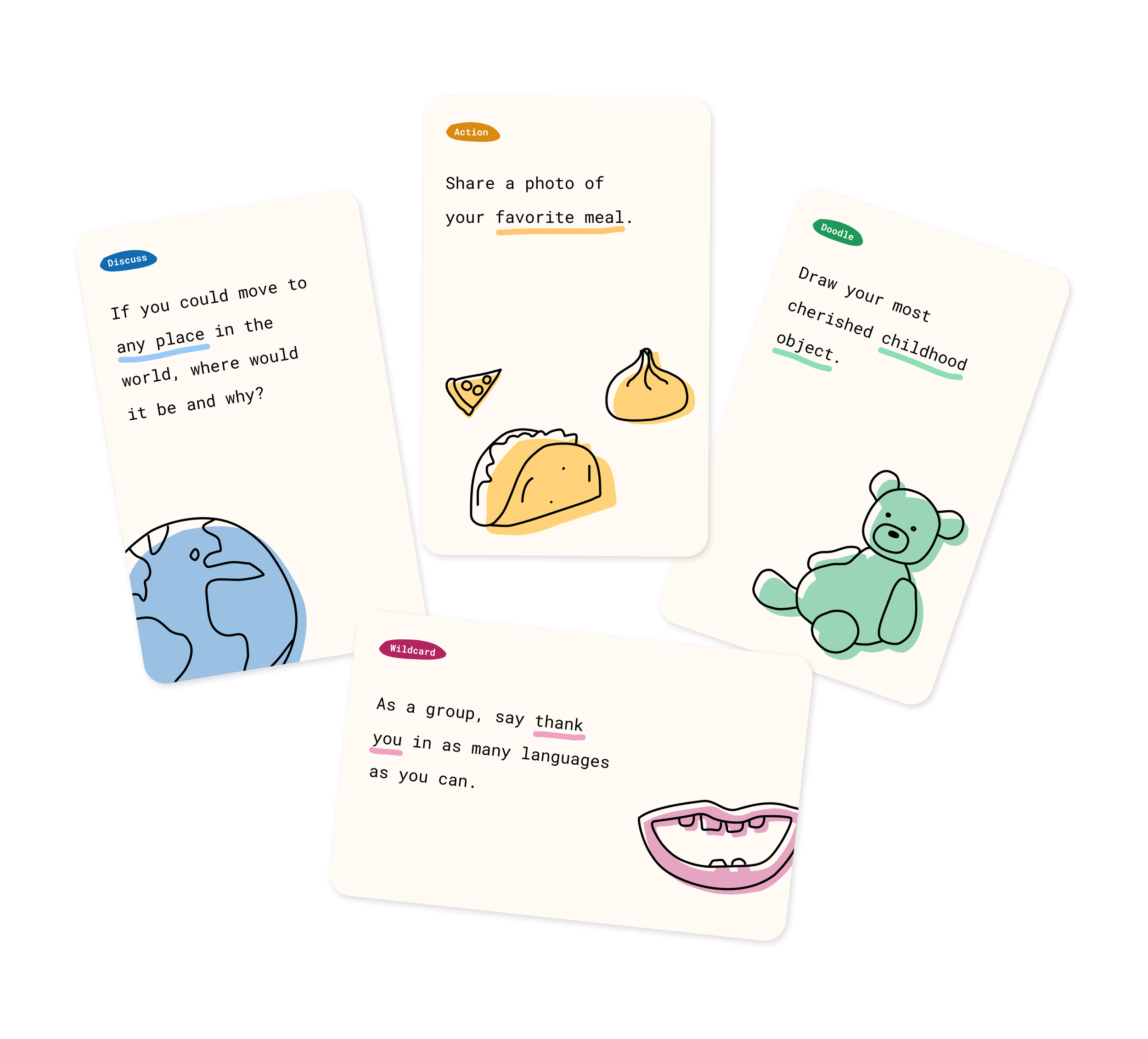
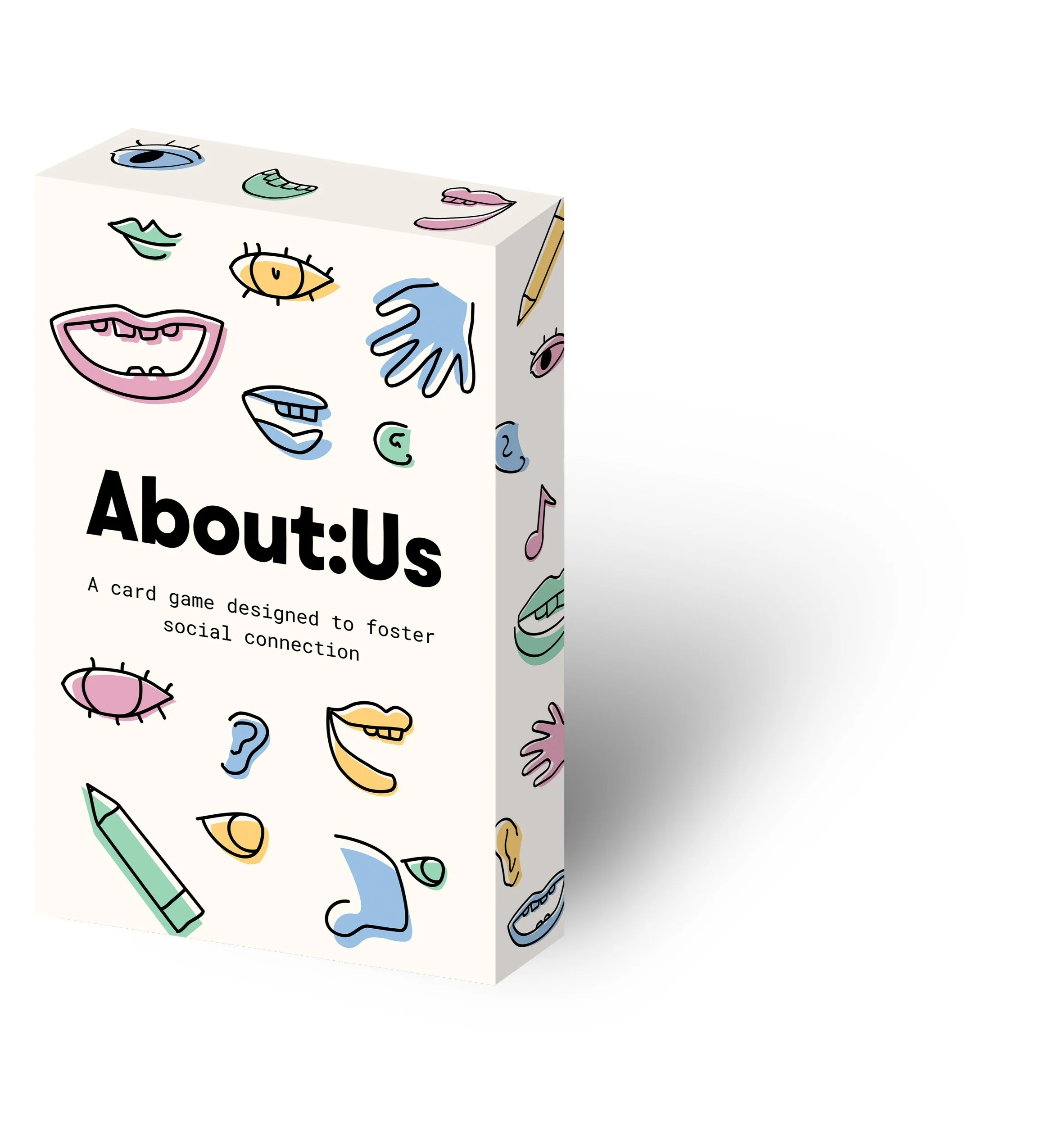
45 prompt cards
Designed to encourage conversations about food, family, and community balanced with humor and interactive play
4 card types
Discuss - Share culture, hopes and dreams, interests, and more
Doodle - Create and share silly drawings… no drawing skill required!
Action - Change up the pace by acting out something you’re interested in
Wildcard - Engage in teamwork to collectively answer a prompt in one minute!
A group-based icebreaker
Teachers can create groups of 3-5 students with a mixture of international students and domestic students and play for a recommended 20-30 minutes, but anywhere from 10-90 can work.
Problem Statement
International and domestic students need a way to connect and build cultural understanding because there is a lack of ongoing ways to help them integrate.
problem space backgroundImmigrant and international students in the U.S. face numerous challenges, including acculturation, language barriers, fitting in, and hostility.
1/
3/
28% of students in the U.S. are international.
A total of 69,518 international students were enrolled in U.S. high schools in fall 2019.¹ In 2018, students of immigrant-origin made up 28% of all students in higher education.²
…like difficulties adjusting and hostility.
Acculturation challenges include difficult adjustment periods, pressure to assimilate culturally, racially, and socially, stereotypes, and native-born hostility towards international students and international communities.¹
2/
4/
These students face unsettling experiences…
The difficulties of English, anxiety over the physical environment, and lack of friends coalesce to create unsettling experiences for these students as newcomers.³
As a result, international students feel alienated.
When international students feel unvalued, unaccepted, and ill-fitted to their new community, they will increase their identification with other non-U.S. citizens, as they share a collective experience such as being treated as an outsider or foreigner.⁴
https://www.insidehighered.com/quicktakes/2020/11/12/international-student-numbers-us-high-schools-decline
https://www.higheredimmigrationportal.org/national/national-data
http://www.jstor.org/stable/44075297
https://www.acui.org/resources/bulletin/bulletin-detail/2018/11/12/understanding-international-students-experiences-with-social-integration
Generative Research / Semi-structured InterviewsI prepped and conducted 3 of 5 semi-structured interviews in one week to learn about the school’s current initiatives to support international students and the continued challenges.
Participants:
Director and Associate Director of DEI
School Counselor
Director of Boarding School
Director of Global Affairs
Four student resident advisors (senior international students)
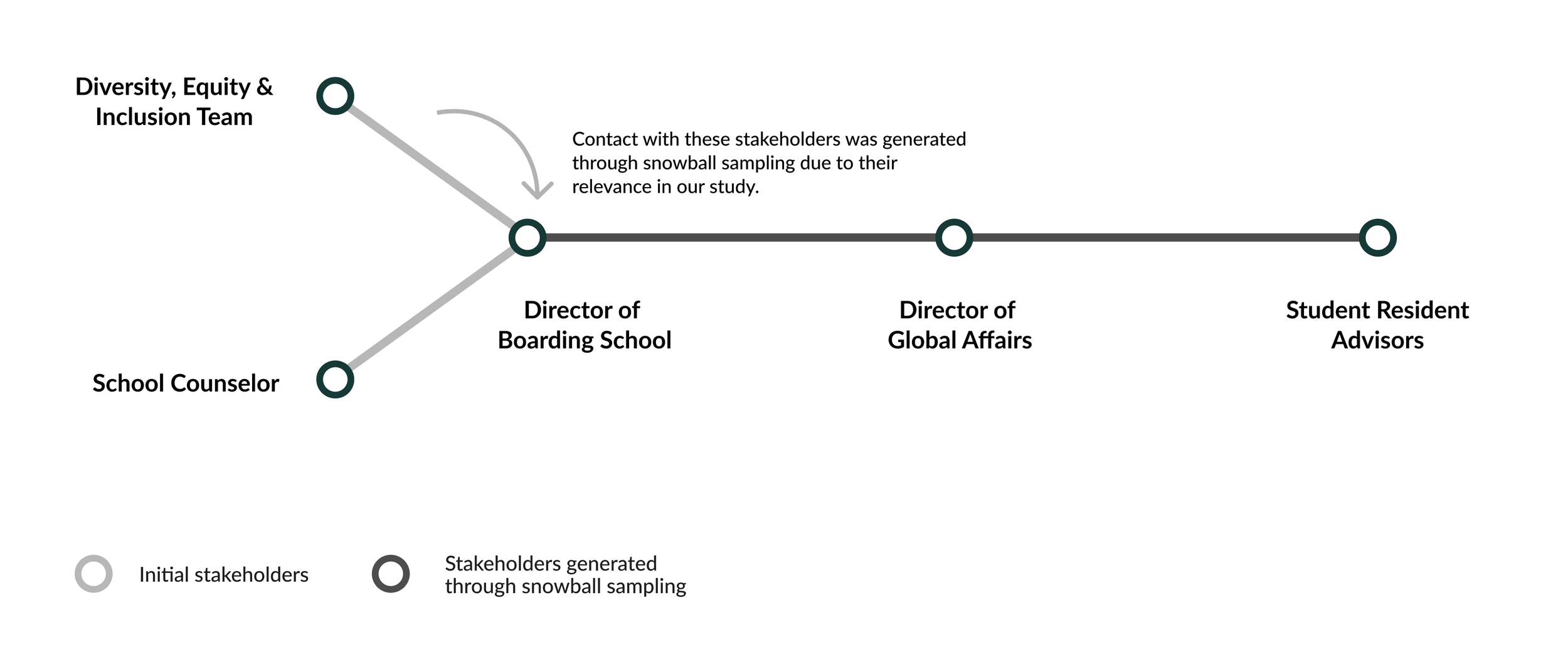
Overview of our snowballing process
Generative Research / Contextual InquiryWe also conducted a contextual inquiry in the school cafeteria during lunch time and in the dorms: these weren’t potential spaces for integration, and the classroom would be the best setting because it is naturally shared.
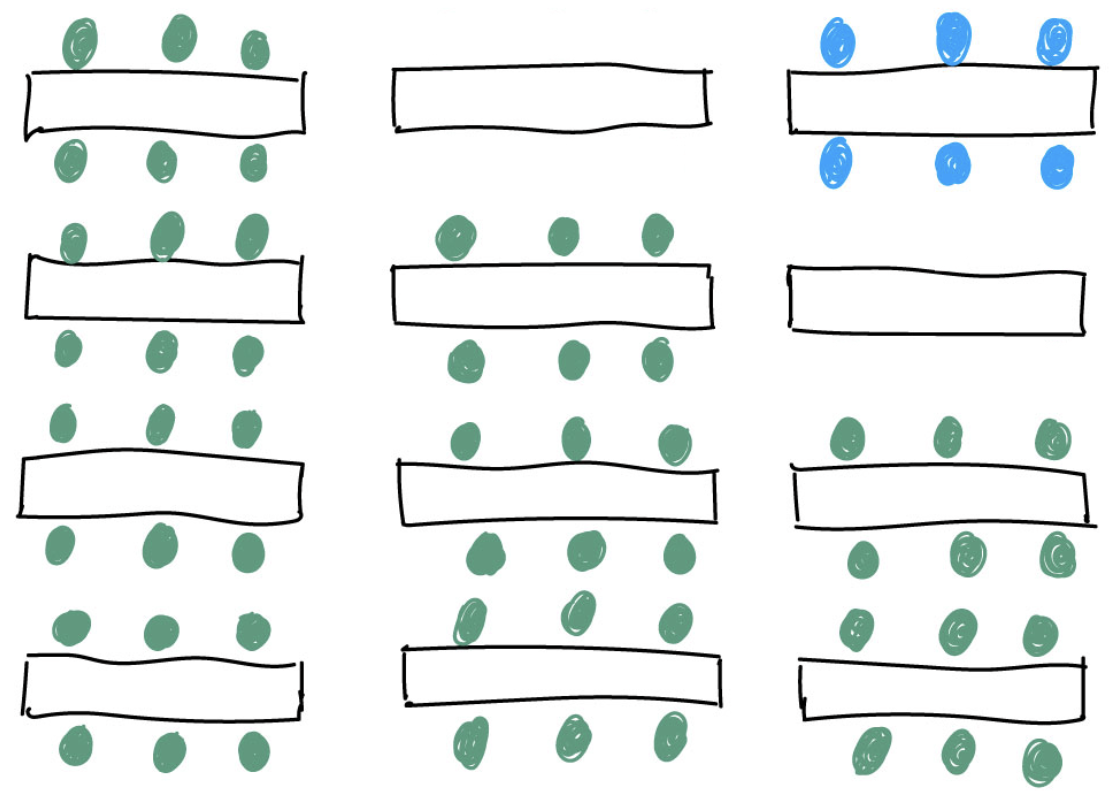
International students (represented in blue) and domestic students (green) sat separately in the cafeteria. Appalling. Illustration by me.
ideationFrom synthesizing our research, my team and I developed four design principles. We then brainstormed 120+ ideas and used these as downseletion criteria.
Low Burden
A design solution should be able to be implemented throughout the school year in order to consistently provide opportunities for connection.
Intercultural Empathy
A design solution should foster understanding and respect for the diverse cultural backgrounds among all students.
Ongoing Support
A design solution should relieve burden and avoid relying on students to take initiative that might feel “one-way.”
Mutually Engaging
A design solution should leverage shared interests and activities as a way to engage connection while being fun.
winning conceptUltimately, an in-class card game to get students interacting and getting to know each other in class was our favorite idea. Here’s why:
Leverage limited shared time and space
A game can be played in any class that domestic and international students share, overcoming the social divisions that form outside the classroom.
No-tech solution
A no-tech solution was crucial based on secondary research I conducted, finding that today’s teens are the loneliest generation due to their over-absorption into technology.* We didn’t want to add one more.
Low burden of participation
The game itself (and a facilitator like a teacher) provide the impetus for interaction, so that the onus isn’t placed on any students to initiate.
Flexible, scalable, & low-barrier to entry
A card game isn’t limited to being played in the classroom—it can be played anywhere, which makes it flexible. The cost effectiveness of a card game meant it could be accessible for schools with any budget.
Prototype testingWe conducted four tests of a lo-fi prototype in two days, with two iterations in between tests, including one test with a group of four high school students.
Specifically, I wanted to verify the role and implementation of our design, such as game dynamics, card content, & level of enjoyment.
Prototype Test Research Questions
-
Does this design contribute to interconnectedness and appreciation for diverse cultures?
Are students building connections through this game?
Do prompts facilitate a range of discussion about cultural themes and experiences?
-
How is the flow of the game?
Are students actively listening and learning from each other?
What is the effect of individual and group contributions on the game?
-
Is there a balance between lighthearted and deep questions?
Which prompts seem to facilitate the most and least connection?
How do people feel about each of the four different card types?
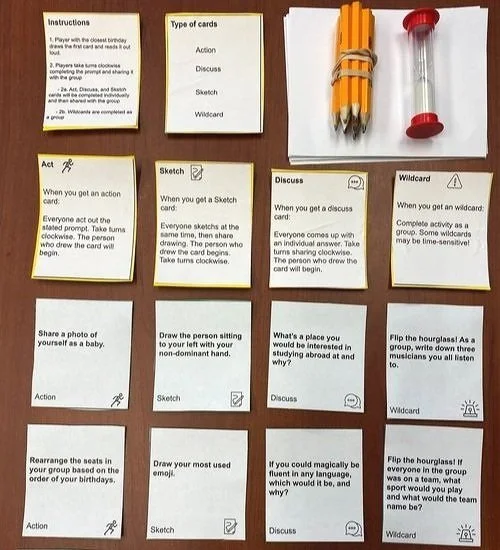
A sample of the lo-fi cards I made with my team.
Role
Implementation
-
Can students play the game with ease?
Is there a clear sequence of how the game is played?
-
How long does it take to play the game?
How many players can play the game at the same time?
Do they need extra tools to play the game?
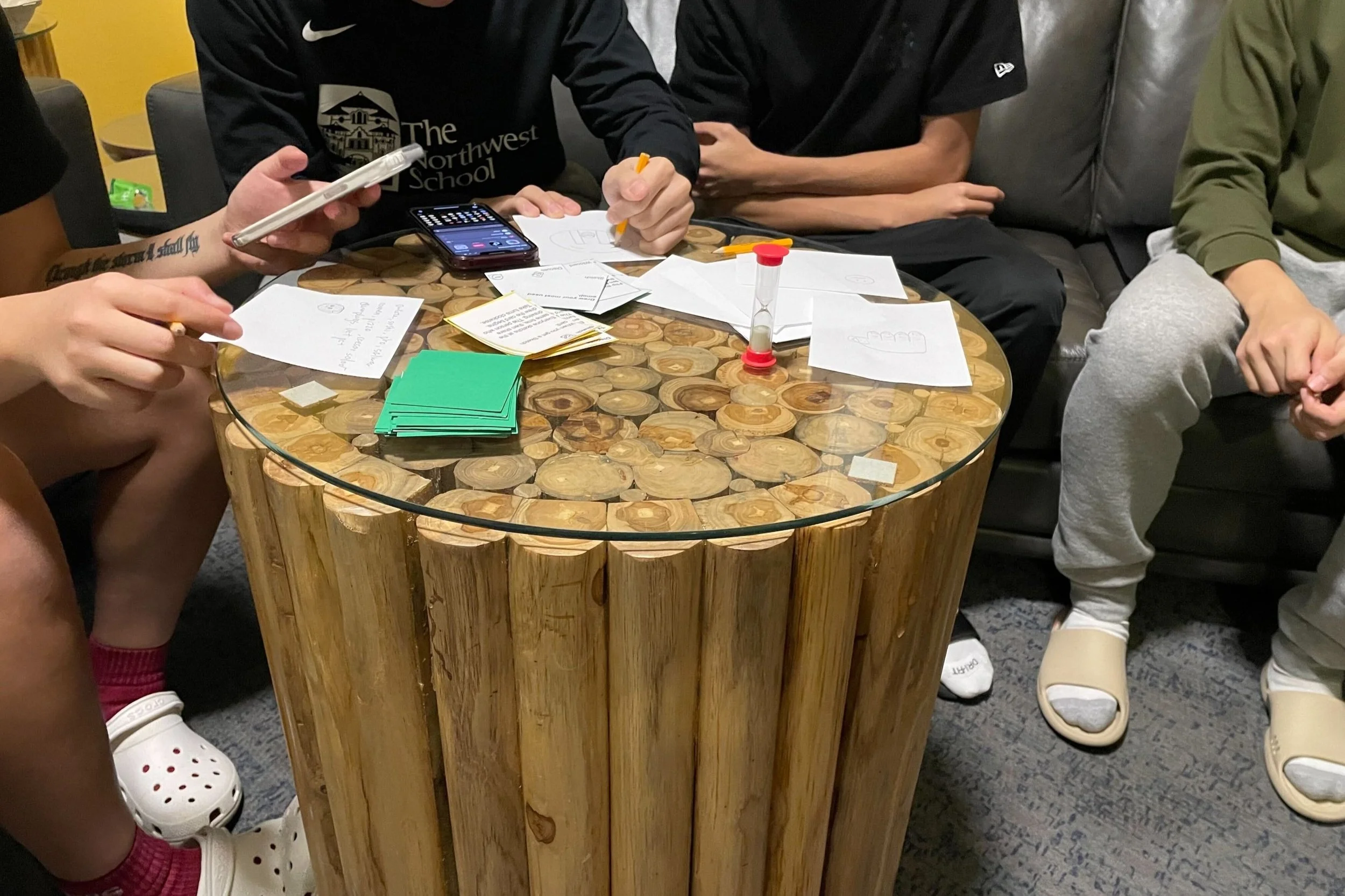
A photo from the test I facilitated with students.
Prototyping & Evaluation ResultsTesting validated—
Including different styles of social interaction can help our design appeal to a variety of personality types.
Students like icebreakers and this one is better than the ones they currently use
The card variety and balance
The game works best with 3-5 participants.
The game’s look & feel
Our iterations included—
More “dynamic” card types to make the game more engaging and comfortable
Numerous deletions, edits and revisions to individual prompts
Improvements to visual layout & typesetting
Reality
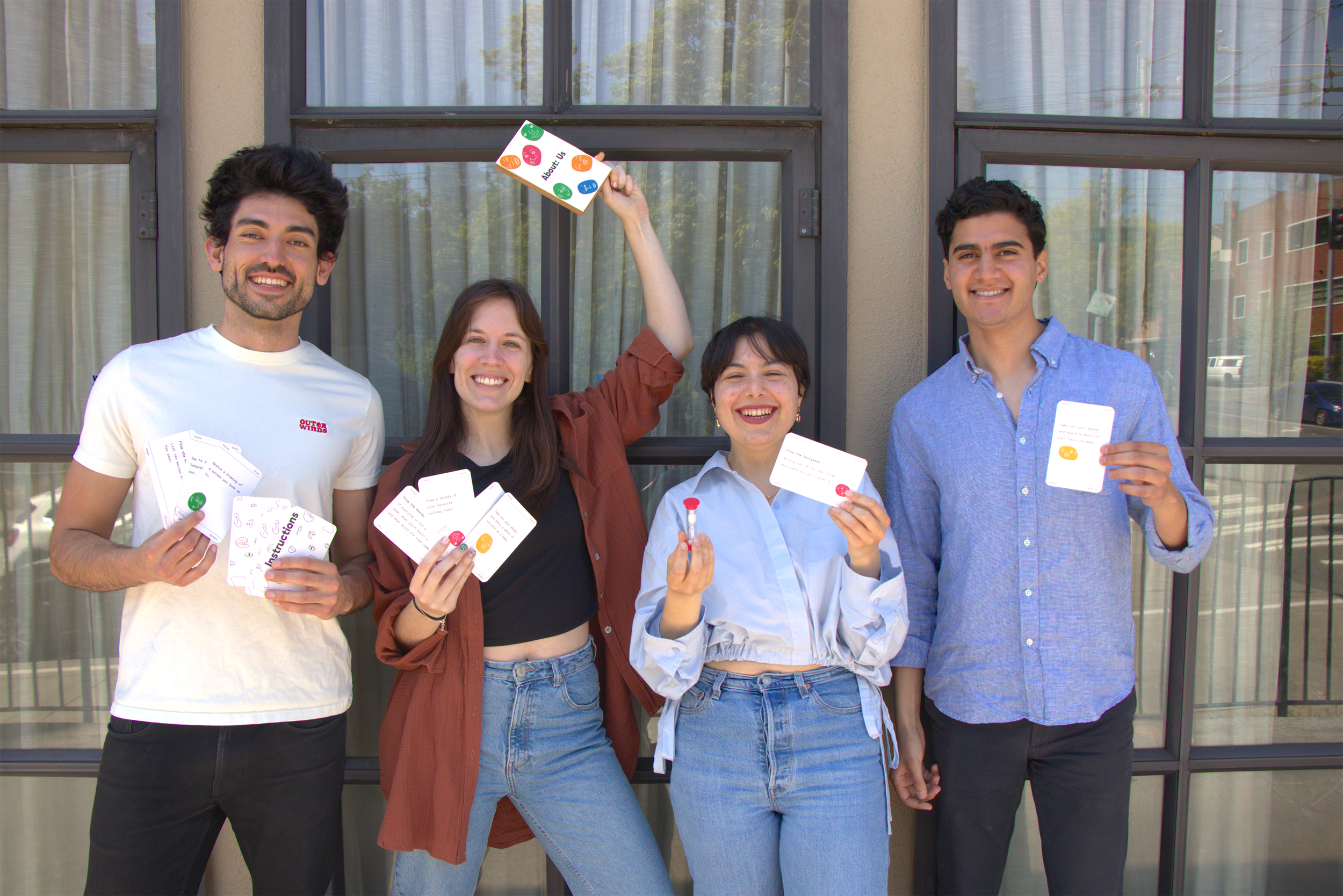
About: Us will appear in classrooms in Winter 2023!
Back in February, we pitched About: Us to the Northwest School in Seattle, where we conducted our research. They were so pleased that they agreed to invest in printing the game and are planning to implement it at student orientations and classrooms in the upcoming school year. We are planning to make About Us widely available following the NWS launch.
Reflection
Learn from similar products & don’t necessarily ideate everything from scratch.
Starting out, we didn’t know anything about game design, and conducting a competitive analysis saved us a lot of time when figuring out how About:Us would actually work.
Know when it’s time to stop iterating & your product is ready to move forward.
Additional tests in the spring started to only yield data about specific prompts. We realized that one person may like a prompt and the next person won’t, so we decided that it wasn’t worthwhile to keep iterating.
Do your due diligence when it comes to understanding your problem space.
The school DEI team wanted a bias reporting tool based on their assumptions of bias and discrimination taking place at the school, but we wouldn’t have discovered the problem of needing to support integration in an ongoing way without conducting qualitative research.
Image Gallery
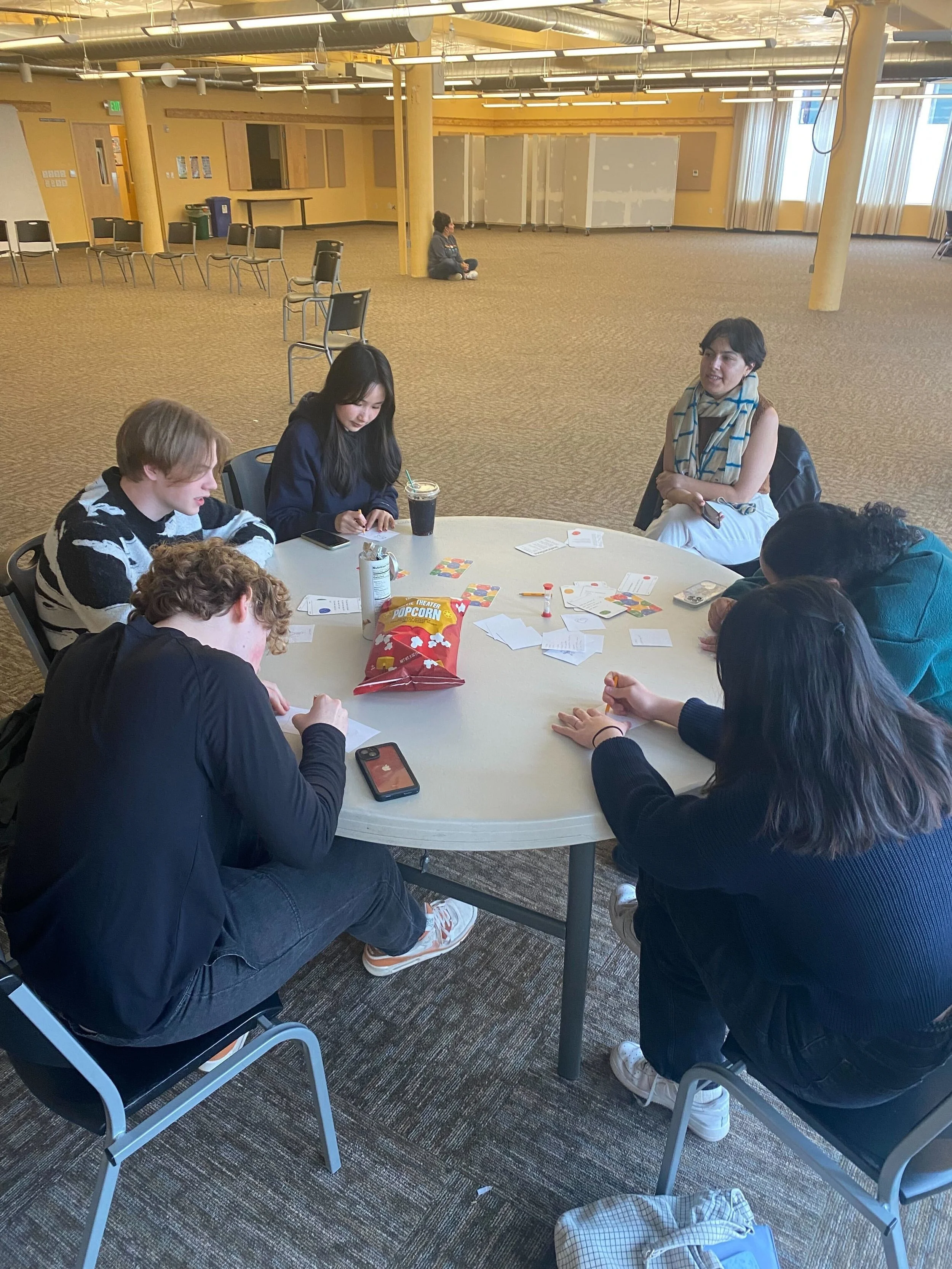
Myself conducting a game testing session with high school students grades 9 to 11.
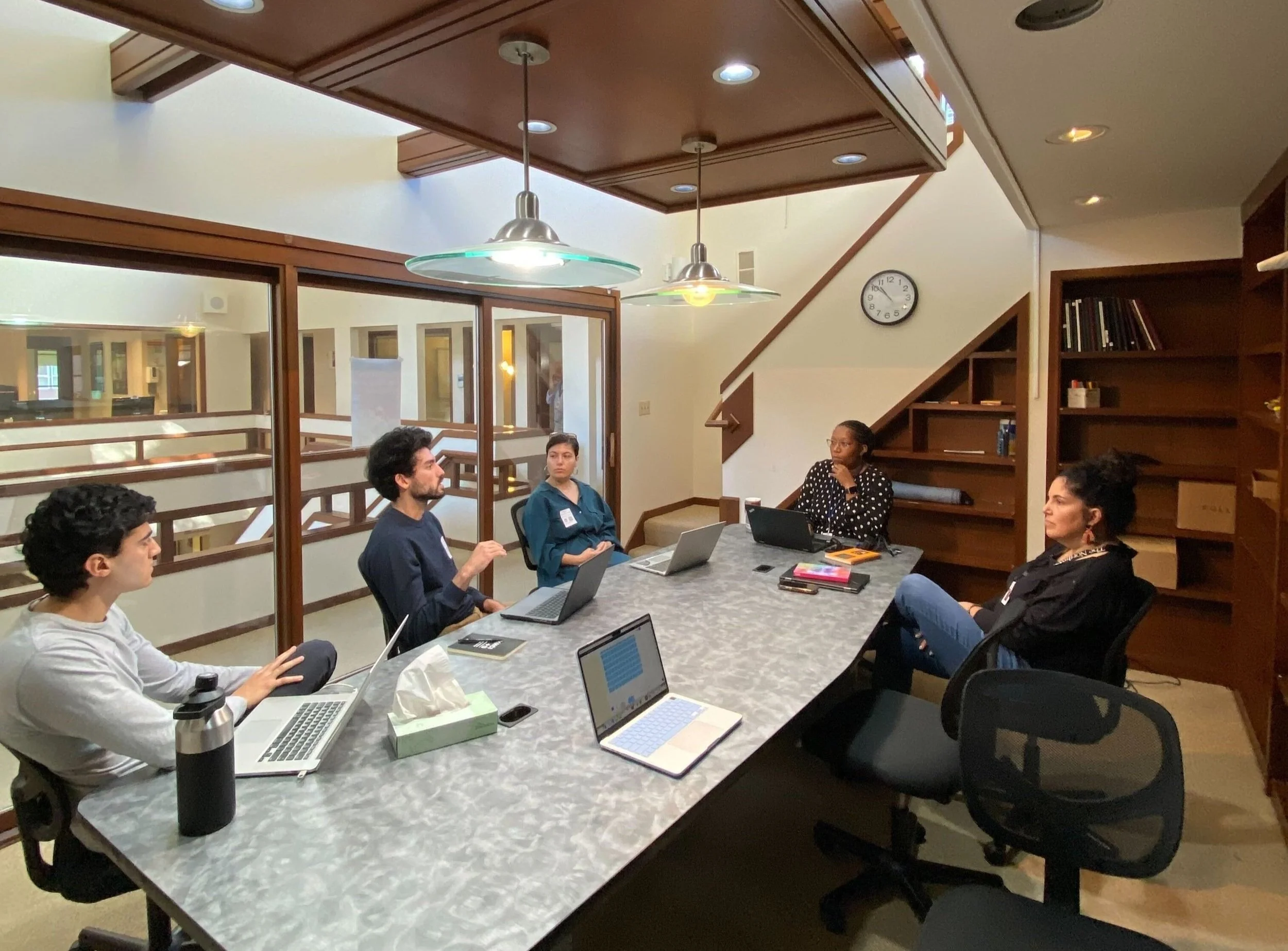
Presenting About:Us to the NWS principal and stakeholders, when we won investment in the game.
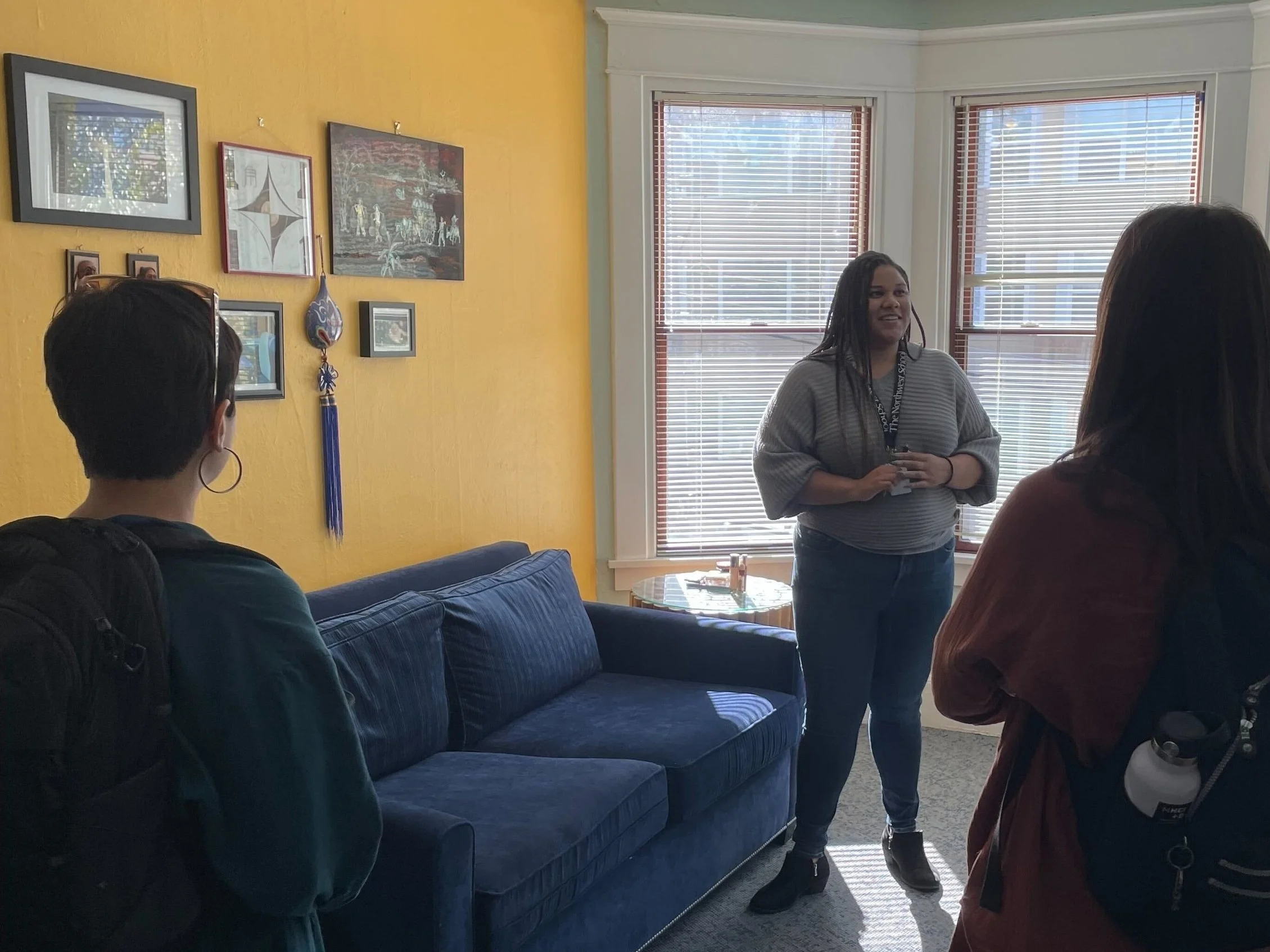
A picture taken during our contextual inquiry into the dorms where the international students live, guided by the Head of Dorms.
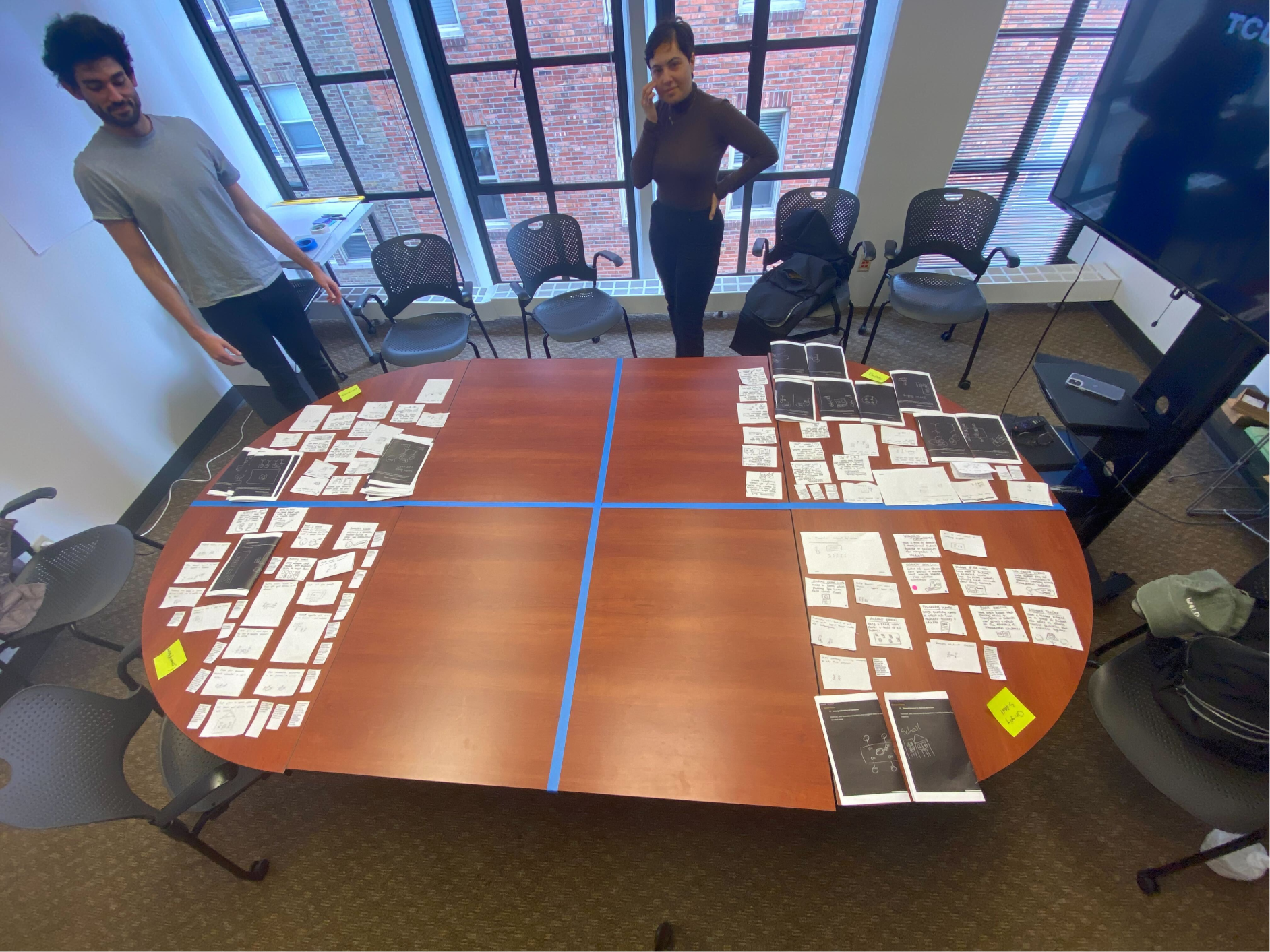
The matrix we used to sort our 120+ ideas at the beginning of our downselection process.
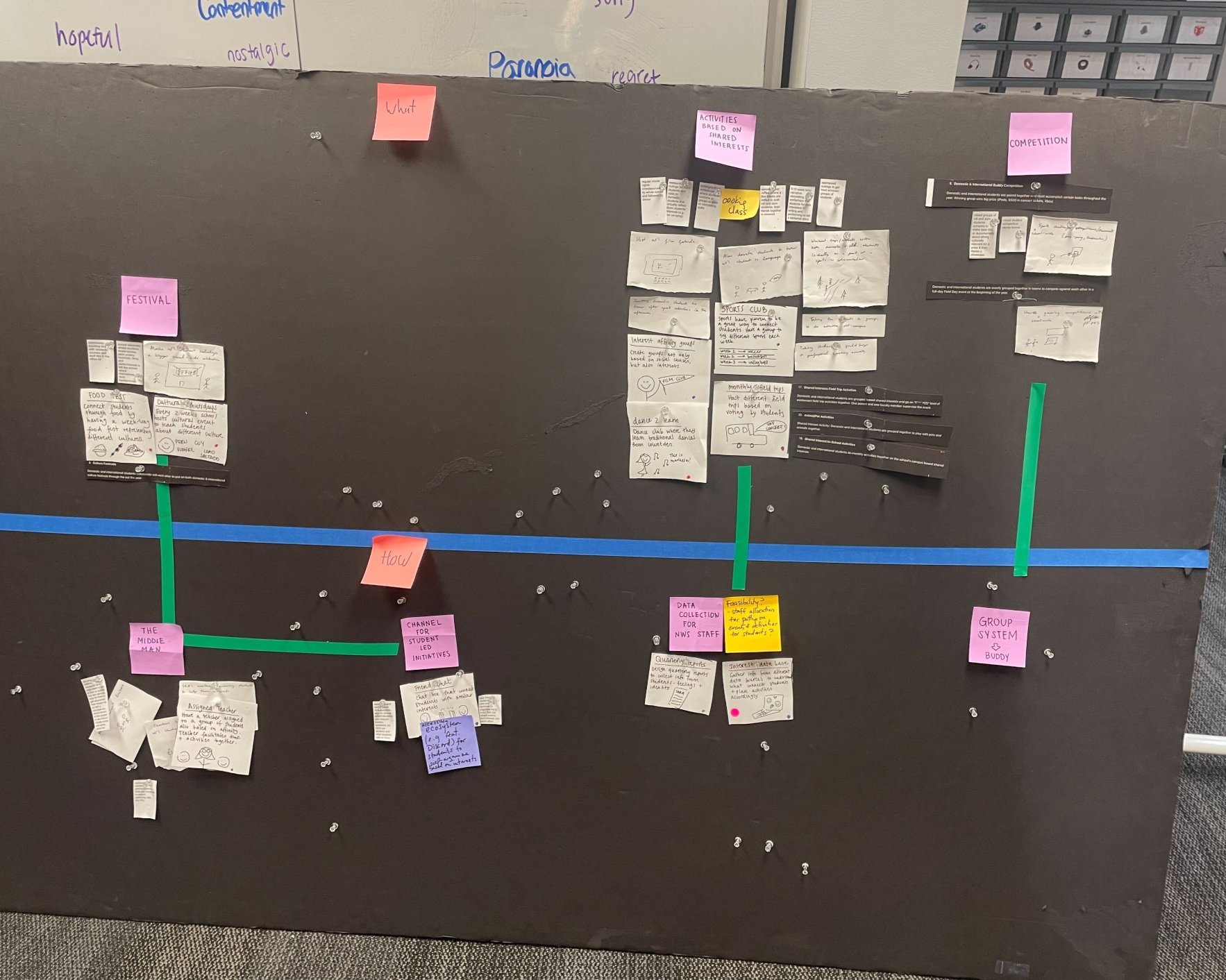
After sorting using the matrix, we pinned ideas up into general groupings to narrow down further.